NFL Over/Under Betting Tips — Totals Strategy for UK Punters
 Available in US
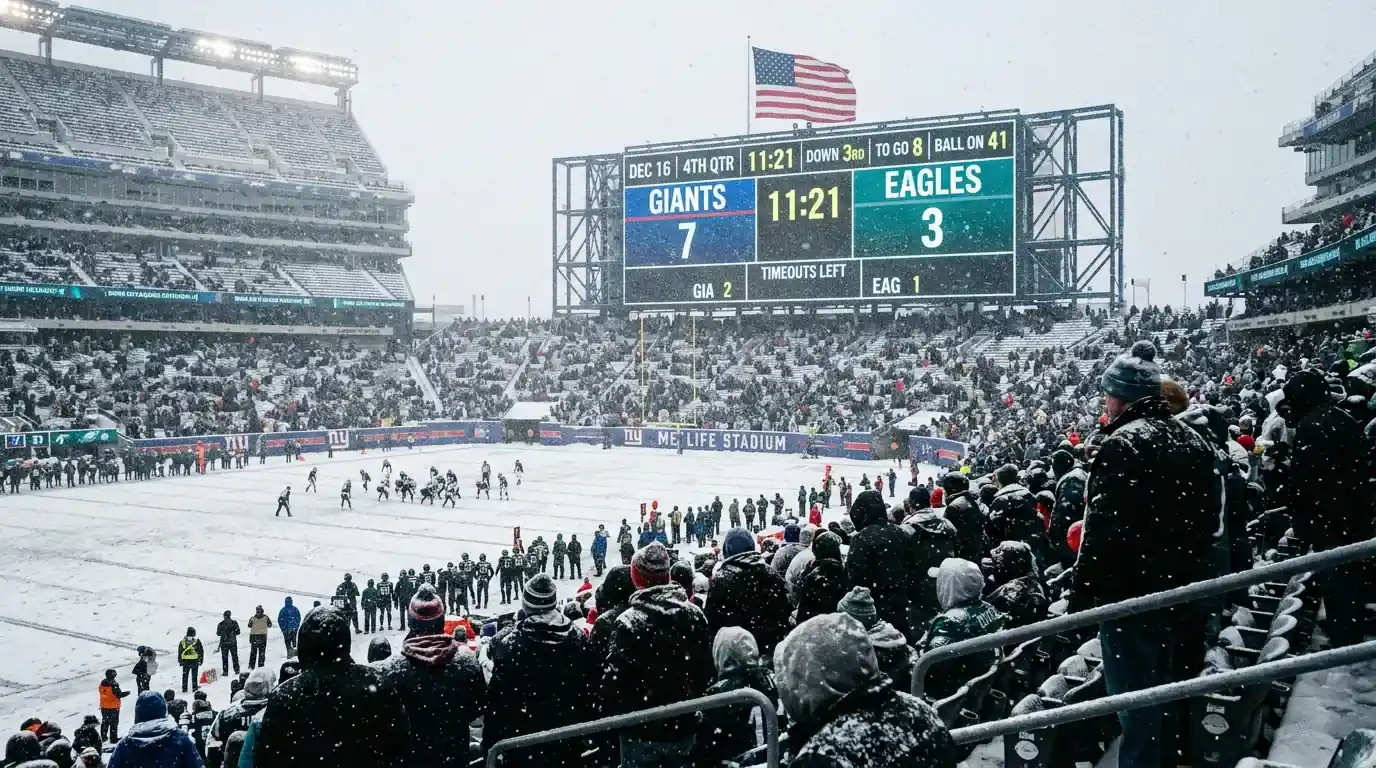
I once watched a December game between two top-five defences in a snowstorm in Buffalo. The total was set at 39.5. The final score was 6-3. The under hit by 30 and a half points. It was the most boring game I’ve ever watched — and one of the most profitable bets I’ve ever placed.
Totals betting — also called over/under betting — strips away the question of who wins and asks something simpler: how many combined points will both teams score? The bookmaker sets a number, and you bet whether the actual total will finish higher (over) or lower (under). It sounds straightforward, and the mechanics are. But setting yourself up consistently on the right side of the number requires understanding a handful of variables that most casual bettors ignore entirely.
How Bookmakers Set NFL Totals Lines
There’s a common misconception that bookmakers set the total to predict the exact combined score. They don’t. They set it to attract equal action on both sides, creating a balanced book where the bookmaker profits from the vig regardless of the outcome. The opening line is based on modelling — power ratings for each offence and defence, historical scoring averages, venue data — but once the line is published, it moves based on betting activity.
During the 2025 NFL season, the average game total across the league was approximately 46 points. But that average obscures massive variation. Games between high-powered offences might post totals of 52 or 53, while defensive slugfests sit in the low 40s or even high 30s. The bookmaker’s opening number reflects a game-specific prediction, not a league-wide average, and sharp money often moves the line within minutes of its release.
What this means for you: the opening line is the market’s first estimate, and it’s not always right. If your analysis of the specific matchup gives you a different number than the bookmaker’s opening line, that’s your signal to investigate further. The wider the gap between your number and the market number, the more interesting the bet becomes.
Weather, Wind, and Altitude: Impact on Scoring
Ask most UK punters what affects NFL scoring and they’ll say “the teams.” Fair enough. But I’ve found that weather, particularly wind, is the most underpriced factor in the totals market.
Wind above 15 mph significantly reduces passing efficiency. Quarterbacks struggle with accuracy on deep throws, kickers miss field goals at higher rates, and punt coverage becomes chaotic. A game that might total 48 points in a dome can realistically drop to 38-40 in gusty conditions. I check the weather forecast for every outdoor NFL venue on Friday and Saturday, and when sustained winds above 20 mph are expected, I look hard at the under.
Rain and snow have a smaller but still measurable effect. Wet conditions increase fumble rates and reduce offensive tempo, which tends to compress scoring. Extreme cold — below minus 10 Celsius — stiffens footballs and fingers alike, affecting both throwing and catching. The famous “Ice Bowl” conditions are rare, but games in Green Bay, Chicago, and Buffalo during December and January regularly feature temperatures that suppress scoring.
Altitude matters in one specific venue: Denver. The Broncos play at 1,600 metres above sea level, where the thin air makes the ball travel farther on kicks and punts. Field goal range extends, deep passes carry differently, and visiting teams sometimes struggle with conditioning in the second half. Denver games have historically skewed slightly higher-scoring than the same matchups at sea level, and it’s worth noting when the Broncos host a high-tempo offence.
Pace of Play, Defensive Rankings, and Scoring Environment
The NFL averaged 18.7 million viewers per game during the 2025 season — a number that reflects how watchable the league has become, partly because rule changes over the past decade have tilted the game towards more offence. But “more offence” doesn’t mean every game is a shootout. The scoring environment of a specific matchup depends on two things: how fast both teams play, and how good both defences are.
Pace of play is measured in plays per game. A team that averages 68 plays per game creates more opportunities to score than one averaging 57. When two high-pace teams meet, the combined play count can exceed 140, inflating every counting stat and pushing the total upward. When two slow-pace, grind-it-out teams meet, the combined play count might barely crack 115, and the total tends to stay flat.
Defensive rankings matter in a specific way: not total yards allowed (a misleading stat because it ignores pace), but yards per play allowed and points per drive. A defence that allows 5.8 yards per play is significantly more porous than one allowing 4.9, even if their total yardage numbers are similar. I use points per drive as my primary defensive metric for totals analysis — it captures both scoring efficiency and red-zone performance in a single number.
When a top-five offence by points per drive meets a bottom-ten defence, the over is usually the right lean. When two top-ten defences clash, the under gets interesting. The value is in the extremes — the middle of the spectrum is where the bookmaker’s line is most likely to be accurate.
Situational Spots: Divisional Rematches, Short Weeks, and Primetime
Divisional rematches are the situational spot I track most closely for totals. When two teams from the same division meet for the second time in a season, both coaching staffs have extensive film from the first matchup. Defensive coordinators scheme specifically to take away what worked the first time around. The result, historically, is that the second meeting between divisional rivals tends to be lower-scoring than the first — a pattern that’s particularly pronounced when the first meeting was a high-scoring affair.
Short-week games offer a different angle. NFL London games have produced some interesting trends here — with favourites winning 65.6% of the time across 33 London contests since 2007, the neutral-venue dynamics create unique scoring patterns. Teams playing on short rest (Thursday night games after a Sunday game) tend to run simpler offensive schemes because there’s less time to install new plays. Simpler schemes are easier to defend, which again favours the under in certain matchups.
Primetime games — Sunday night, Monday night, and Thursday night — carry a subtle psychological factor. Players are more aware of the national audience, and some coaches play more conservatively in close games on the big stage. The data here is noisy, and I wouldn’t bet a totals number based on primetime psychology alone, but it’s a tiebreaker when other factors already point toward the under.
Totals Tell a Story the Spread Can’t
Spread betting asks who wins and by how much. Totals betting asks what kind of game this will be. They’re fundamentally different questions, and I’ve found that the totals market is consistently less efficient than the spread market — partly because casual bettors gravitate toward picking winners, leaving the totals to those of us who actually enjoy digging into pace data and wind forecasts. If you’re the type who’d rather study the conditions than the storylines, totals might be the most natural NFL market for you.
How does weather affect NFL over/under bets?
Wind is the most impactful weather factor for NFL totals. Sustained winds above 15 mph reduce passing accuracy, increase missed field goals, and lower scoring. Rain and snow have a moderate effect through increased fumbles and slower tempo. Extreme cold also suppresses scoring. Always check the forecast for outdoor venues before betting a total.
Are NFL London Games more likely to go under the total?
London Games have shown some tendency toward lower-scoring contests in recent seasons, partly due to travel fatigue, early kick-off times, and the neutral-venue factor that limits home-field offensive advantages. However, the sample size across 33 games since 2007 is relatively small, so treat it as one factor among many rather than a reliable standalone angle.
Discover everything about bet nfl games here.
Check out our guide on NFL Parlay Betting UK — Accumulators, Odds, and Risk as well.
Published by the bet nfl Games team.