Super Bowl Betting UK — Odds, Markets, and Prop Bets Guide
 Available in US
Table of Contents
- The Scale of Super Bowl Betting: Handle, Viewership, and Hype
- Super Bowl Bet Types Available in the UK
- Super Bowl Prop Bets: From MVP to Coin Toss
- Betting on the Super Bowl Winner Before the Season Starts
- Kick-Off at Midnight: Betting the Super Bowl on UK Time
- Staying in Control During the Biggest Betting Event of the Year
I’ve stayed up past midnight to watch every Super Bowl since 2017. The early years were just about the game — the spectacle, the halftime show, a few casual bets placed more for entertainment than profit. But somewhere around Super Bowl LIV, the event stopped being a single game for me and became an entire betting ecosystem: spreads, totals, player props, novelty markets, live wagers changing by the second, and a handle that dwarfs any other single sporting event on earth.
Super Bowl LX drew $1.76 billion in expected legal wagers in the United States alone — a 27% increase year on year. That figure doesn’t include UK betting volume, which is growing as the NFL’s British fanbase expands past 13 million people. For UK punters, the Super Bowl is the one NFL event that needs no introduction. Everyone knows it’s on. The question is whether you’re ready to bet it with the same analytical rigour you’d apply to a week 8 spread — or whether you’re treating it like a punt at the Grand National.
This guide covers both ends of that spectrum. I’ll break down the markets available at UK bookmakers, explain the prop bet universe that makes the Super Bowl unique, walk through futures strategy for punters who want to bet the winner months in advance, and address the responsible gambling dimension that becomes especially important when the biggest betting event of the year kicks off at midnight UK time.
The Scale of Super Bowl Betting: Handle, Viewership, and Hype
No sporting event on the planet generates more betting action in a single day than the Super Bowl. Not the Champions League final, not the World Cup final, not the Kentucky Derby. The Super Bowl stands alone because it combines universal brand recognition with a three-hour window of concentrated wagering that no other event replicates.
The numbers tell the story in a way that adjectives can’t. Super Bowl LX was projected to attract $1.76 billion in legal wagers through US bookmakers — and that 27% year-on-year jump came despite the game itself lacking the storyline drama of some previous editions. The American Gaming Association’s Bill Miller put it plainly: “No single event brings fans together like the Super Bowl, and this record figure shows just how much Americans enjoy sports betting as part of the experience.” But the handle number only captures the US legal market. Globally — including UK bookmakers, European operators, and offshore platforms — the Super Bowl betting volume is substantially larger. Conservative estimates place the worldwide handle north of $5 billion.
Viewership amplifies the betting. Super Bowl LX drew 124.9 million average international viewers. Super Bowl LIX the year before peaked at 137.7 million in the United States alone. The Chiefs-Cowboys Thanksgiving game in 2025 — which pulled 57.2 million US viewers and became the most-watched regular-season game in NFL history — illustrated how deeply embedded NFL viewing has become. The Super Bowl takes that baseline and multiplies it by an order of magnitude.
For UK punters, the scale matters for two practical reasons. First, the sheer volume of money flowing into Super Bowl markets means spreads and totals are among the sharpest lines you’ll encounter all year. Casual public money is enormous, but so is sharp professional action. The two forces compete, and the result is a market that’s harder to beat than a week 6 spread where the handle is a fraction of the size. Second, the volume creates liquidity in markets that don’t exist for regular-season games: exotic props, quarter-by-quarter betting, drive-result markets, and novelty wagers that wouldn’t sustain enough action outside the Super Bowl context. More markets means more opportunities — but only if you know where to look.
Super Bowl Bet Types Available in the UK
Every bet type that exists for a regular-season NFL game is available for the Super Bowl — and then some. UK bookmakers roll out their deepest NFL market sheets of the entire season for this one game, and the variety is worth understanding before you start placing bets.
The core markets are the same ones you’d encounter on any Sunday. The point spread sets a margin: if one team is favoured by four points, they need to win by five or more to cover. The moneyline strips the margin away and simply asks who wins. The total (over/under) sets a combined score — say, 49.5 — and asks whether the actual combined score finishes above or below that number. These three markets absorb the bulk of the handle even on Super Bowl Sunday, because they’re the markets where the odds are sharpest and the betting limits are highest.
Beyond the core, UK bookmakers open half-time and quarter markets. You can bet on the spread, moneyline, or total for the first half alone, or for individual quarters. Half-time markets are particularly popular among punters who have a view on how the first 30 minutes will play out — whether one team starts fast, whether the defences dominate early before the offences adjust. I use first-half spreads more frequently than full-game spreads for the Super Bowl, because the first half tends to be lower-scoring (nerves, conservative play-calling, extended pre-game ceremonies eating into rhythm) and the market doesn’t always price that conservatism fully.
Team and player props expand the menu further. Team props include bets on the first team to score, whether a specific team will score in every quarter, and the exact winning margin. Player props — which deserve their own section — cover passing yards, rushing yards, receptions, touchdowns, and dozens of statistical categories for individual players. Then there are the novelty and entertainment props that make the Super Bowl unlike any other sporting event: the coin toss result, the length of the national anthem, the colour of the Gatorade shower, and whether a specific commercial will air during a specific quarter. These novelty markets carry wider margins and are designed primarily for entertainment, but they draw enormous casual volume.
One market unique to the Super Bowl ecosystem is the “first scorer” bet, which asks you to name not just the first team to score but the specific player who scores the first touchdown — or whether the first score is a field goal, safety, or defensive touchdown. This market carries long odds and high variance, but it’s one of the few Super Bowl markets where the bookmaker’s edge is somewhat offset by the difficulty of pricing it accurately. The first scorer is inherently volatile, and volatility is where sharp punters sometimes find their best prices.
Super Bowl Prop Bets: From MVP to Coin Toss
I once bet on the number of times a television commentator would say “dynasty” during Super Bowl LVII. I lost. But the fact that the market existed — and attracted enough action to be viable — tells you everything about how the Super Bowl props universe works. It’s vast, it’s occasionally absurd, and buried inside the absurdity are markets where genuine value exists.
Player performance props are the serious end of the spectrum. The Super Bowl MVP market opens weeks before the game and typically features the starting quarterbacks as heavy favourites. Since the quarterback is the most influential position and the award skews overwhelmingly toward the winning team’s best player, this market is relatively straightforward to handicap: pick the quarterback of the team you think will win, and you’ll be right more often than not. The value sits in the tail — a defensive player who forces multiple turnovers, a running back who dominates a game script that goes ground-heavy, or a wide receiver who catches the decisive score. These outcomes are less likely individually, but the prices on player props reflect that, and occasionally the price overcompensates.
Passing yards, rushing yards, and reception totals for individual players are the prop markets I spend the most time on. These are quantifiable, researchable, and influenced by matchup-specific factors that the general market doesn’t always price correctly. If the Super Bowl features a team with a weak secondary against a quarterback who averages 280 yards per game, the passing yards over/under for that quarterback should reflect the matchup — but the line is set weeks in advance and sometimes anchors to season averages rather than game-specific projections.
Novelty props are the entertainment layer. The coin toss is a pure 50/50 bet, priced at roughly 10/11 each way — the bookmaker takes a small margin on what is, objectively, a random event. The national anthem length, the Gatorade colour, the first song at the halftime show: these markets carry wider spreads and exist primarily to engage casual bettors who want action beyond the game itself. I don’t bet novelty props seriously. But I understand why bookmakers offer them: they generate volume, they introduce new customers to the platform, and the margins are generous enough to subsidise the thinner edges on serious markets. If you treat novelty props as what they are — entertainment with a built-in house edge — they’re harmless fun. If you treat them as a strategy, you’re donating money.
Betting on the Super Bowl Winner Before the Season Starts
The most profitable Super Bowl bet I ever placed was in May. Not February. Not during the playoffs. May — three months before the first kickoff of the regular season.
Super Bowl futures are the long game of NFL betting. UK bookmakers open winner markets within days of the previous Super Bowl ending, and the odds remain available throughout the offseason, preseason, regular season, and playoffs. The earlier you place the bet, the longer your money is locked up — but the prices are dramatically better. A team that opens at 20/1 in March might trade at 6/1 by week 10 of the regular season if they’re performing well. That difference is where the value lives.
The key decision in futures betting is timing. I’ve found three windows that consistently offer the best risk-reward balance. The first is immediately after the NFL Draft in late April, when rosters have been reshaped but the market hasn’t fully recalibrated. A team that addresses a glaring weakness through the draft — adding a franchise quarterback, a shutdown cornerback, or a dominant pass rusher — will see its odds shorten within days. If you’ve anticipated the draft’s impact before the bookmakers have, the pre-adjustment price is your edge.
The second window is late August, after the third preseason game, when depth charts are finalised and injury reports start to reveal genuine concerns. The third window is the bye week during the regular season: if a team you’ve been tracking has a strong first half but takes its bye in week 7, the odds during that idle week often represent a final opportunity to buy at a reasonable price before the late-season narrative takes over and shortens everything.
A practical consideration for UK punters: not all bookmakers treat Super Bowl futures the same way. Some offer cash-out options that let you take a profit before the game is played if your team reaches the playoffs at short odds. Others lock your stake until the Super Bowl is decided. Check the terms before you place the bet. I prefer platforms that offer partial cash-out, because it creates a hedging opportunity: if my 20/1 shot reaches the Super Bowl, I can cash out part of the bet to guarantee profit and let the remainder ride for the full payout.
Kick-Off at Midnight: Betting the Super Bowl on UK Time
The Super Bowl kicks off at around 11:30pm UK time. That single scheduling fact shapes every aspect of the British betting experience — and most punters don’t plan for it well enough.
The game itself runs three and a half to four hours. Add the extended pre-game ceremony, the halftime show, and the post-game celebration, and you’re looking at a finish time approaching 4:00am. That means the final quarter — where the most dramatic in-play markets unfold, where cash-out decisions become urgent, and where the game’s outcome is decided — falls between 2:00am and 3:30am. You need to be sharp at 3:00am on a Monday morning. Most people are not.
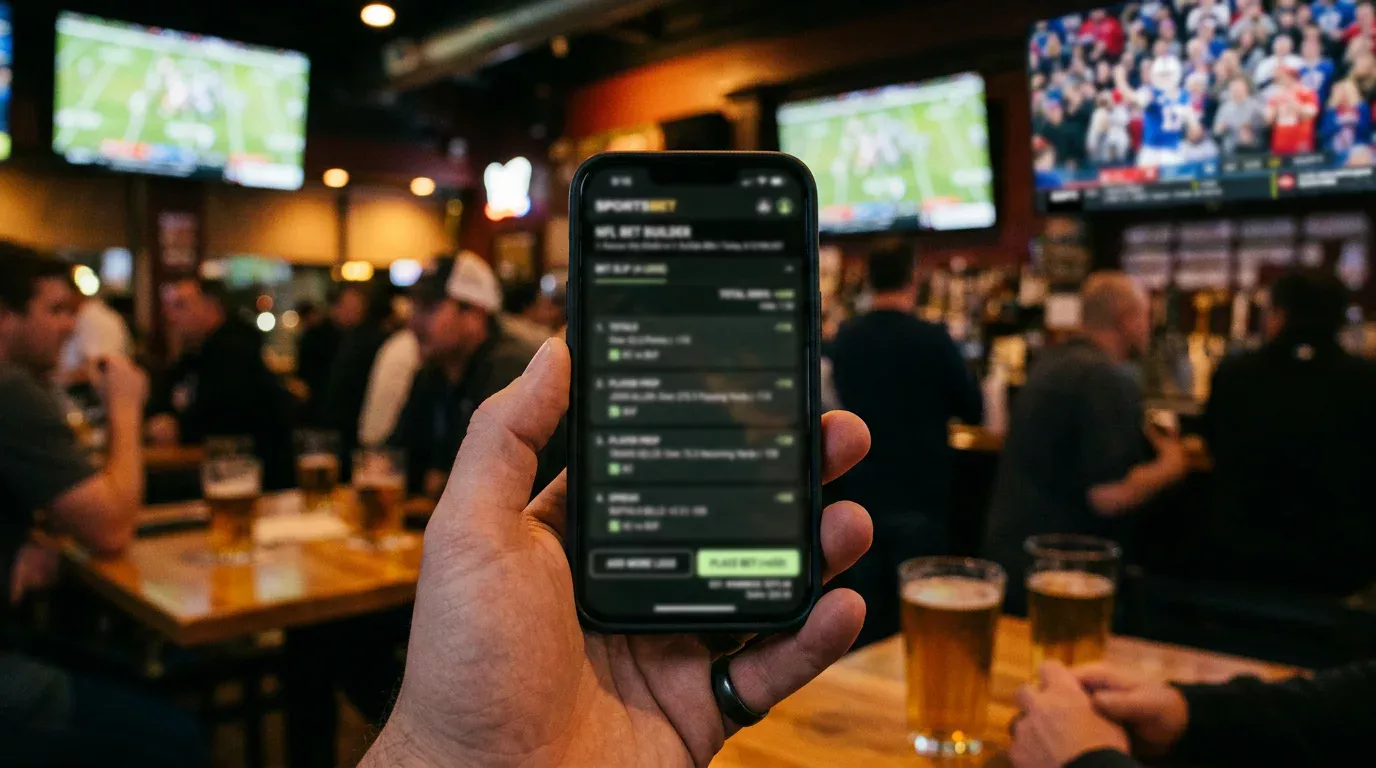
The UK accounts for roughly 3% of global NFL search traffic, with the Kansas City Chiefs commanding 9.5% of UK NFL queries as the most popular team in Britain. That concentrated fandom means Super Bowl Sunday night is a social event — watch parties, pub screenings, living-room gatherings with friends who bet casually. The social pressure to bet impulsively intensifies in a group setting, particularly after midnight when fatigue lowers inhibition and alcohol flows. I’m not moralising here. I’m stating a tactical reality: your decision-making at 2:30am after four hours of watching football with friends is not the same quality as your decision-making at 7:00pm on a Sunday when you’re fresh and focused.
My approach for managing the timing: I place all pre-game bets (spread, total, futures hedge if applicable) by 10:00pm, before the social element kicks in. I pre-select a maximum of two in-play markets I’ll consider during the game and write them down with target entry points. I set a hard stake cap for in-play bets that I don’t exceed regardless of what happens. And I keep a cash-out alert on my phone in case my pre-game positions hit a threshold where taking profit makes sense. This framework turns the midnight-to-4am window from a risk period into a managed one. You don’t need to stop betting the Super Bowl because it’s late. You need to have made your decisions before tiredness makes them for you.
Staying in Control During the Biggest Betting Event of the Year
The Super Bowl is designed to generate excitement. The broadcast, the advertising, the social media saturation, the fact that the entire sports world converges on a single game — all of it creates an atmosphere where betting feels not just easy but almost expected. That atmosphere is precisely why the Super Bowl is the most important time of the year to have boundaries.
The UK’s problem gambling rate sits at 2.7% of the adult population, equivalent to roughly 1.4 million people. Super Bowl night doesn’t create problem gambling, but it amplifies existing vulnerabilities. The late hour, the social pressure, the novelty markets that make betting feel like a party game, the sheer number of available markets tempting you to place “just one more” — these factors combine to push people past limits they’d normally respect.
Anna Isaacson, the NFL’s SVP of Social Responsibility, has acknowledged the league’s role in this space: “We have a very long history of supporting critical societal issues, and accommodating responsible gambling is an issue that we know is impacting people all across the country.” That commitment extends to the UK market, where UKGC-licensed bookmakers are required to offer deposit limits, loss limits, time-outs, and self-exclusion through GamStop.
My responsible gambling framework for the Super Bowl is the same as for any NFL week — it just requires more discipline to enforce. Set a total budget for the event before the day begins. Decide on your bets before kick-off and write them down; any in-play addition must come from that pre-set budget, not from chasing a loss or riding a rush. Take breaks. The halftime show isn’t just entertainment — it’s a 20-minute window to step back, check your total exposure, and decide whether your second-half plan still makes sense. And if the budget is spent, the budget is spent. No top-up. No “exception because it’s the Super Bowl.”
If you or someone you’re watching the game with is struggling with gambling, GamStop provides self-exclusion from all UKGC-licensed platforms, GamCare offers free counselling and support, and the National Gambling Helpline is available around the clock. Using these tools is not weakness. It’s the sharpest bet you’ll ever make.
What time does the Super Bowl kick off in the UK?
The Super Bowl typically kicks off at approximately 11:30pm UK time on a Sunday night (the first Sunday in February). The game runs three and a half to four hours, so expect it to finish between 3:00am and 4:00am Monday morning. Plan your betting decisions around this late schedule — fatigue affects judgement significantly in the final quarter.
Which UK bookmakers offer the most Super Bowl prop bets?
Most major UKGC-licensed bookmakers expand their prop bet menus significantly for the Super Bowl. The depth varies by operator, but larger platforms typically offer 200 or more individual prop markets covering player performance, game events, and novelty categories. Check multiple bookmakers in the week before the game, as prop menus are released on different schedules.
Can I bet on the Super Bowl halftime show or national anthem?
Yes. UK bookmakers commonly offer markets on the length of the national anthem (over/under a set time), the first song performed at the halftime show, and related entertainment props. These are novelty markets with wider bookmaker margins than standard game markets. Treat them as entertainment rather than serious wagering opportunities.
When is the best time to place a Super Bowl futures bet?
The three strongest value windows are immediately after the NFL Draft in late April, during late August when rosters are finalised, and during a contending team’s bye week during the regular season. Odds are longest (and potential payouts highest) early in the cycle. By the time the playoffs begin, prices on remaining teams are significantly shorter.
Find the best options for bet nfl games.
Read our detailed review of UKGC Licensed NFL Bookmakers — What the Licence Guarantees.
Created by the ”bet nfl Games” editorial team.