NFL Odds Explained UK — Fractional, Decimal, and American
 Available in US
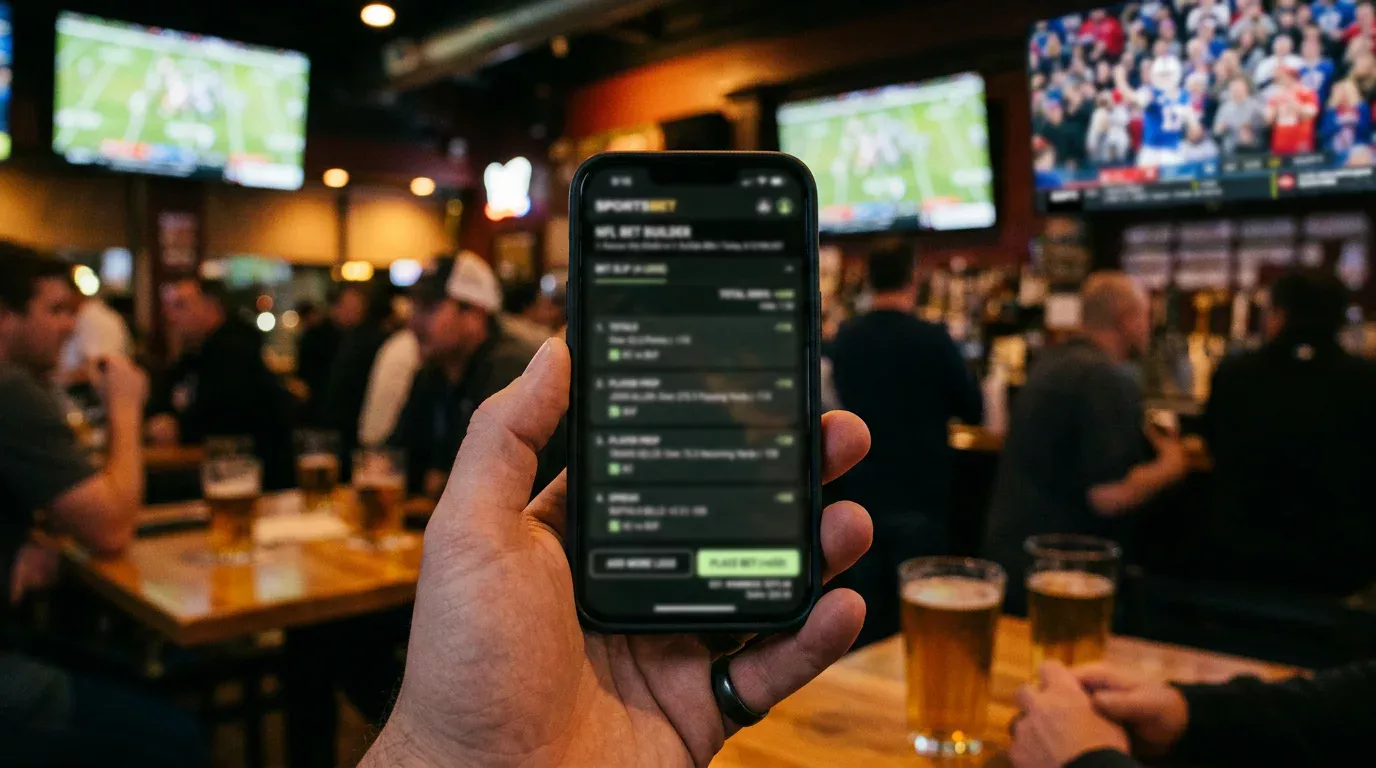
The first time I saw NFL odds on a US sportsbook, I genuinely thought the page was broken. Minus 150? Plus 130? Coming from a UK betting background where everything is 5/2 or 3.50, American odds felt like someone had invented a new number system specifically to confuse outsiders. It took me an afternoon with a calculator and a few practice bets before it clicked — and once it did, the whole world of NFL betting opened up.
If you’re one of the 10% of UK adults who bet on sport online, there’s a good chance you’ve already encountered this confusion. UK bookmakers default to fractional odds, but NFL coverage from American sources uses the American format, and decimal odds pop up across European platforms. To bet the NFL with any confidence, you need to read all three — and more importantly, you need to know what the numbers actually mean beneath the surface. Bill Miller, head of the American Gaming Association, has called legal sports betting a way to “enhance the fun and friendly competition” around NFL games. That enhancement starts with understanding the language the market speaks.
This guide gives you the formulas, the worked examples, and the intuition to move between all three formats without reaching for a converter every time.
Three Odds Formats Every UK NFL Bettor Must Know
Let me use a single NFL game to show you all three formats side by side. Imagine the Kansas City Chiefs are playing the Buffalo Bills. The Chiefs are favoured, and the bookmaker prices them at:
Fractional: 4/7 — This is the format most UK punters grew up with. The number tells you your profit relative to your stake. At 4/7, you win 4 pounds for every 7 you stake. Put down 70 quid and you’d get 40 in profit, plus your 70 back. The smaller the fraction, the shorter the price and the more likely the bookmaker thinks that outcome is.
Decimal: 1.57 — Popular across Europe and increasingly common on UK platforms. This number represents your total return per pound staked, including the stake itself. At 1.57, a 70-pound bet returns 109.90 total — that’s 39.90 profit plus your 70 stake. Decimal odds are arguably the easiest to compare at a glance because the maths is always the same: stake multiplied by odds equals total return.
American: -175 — This is where it gets weird for UK eyes. A minus sign means the team is favoured, and the number tells you how much you’d need to stake to win 100 units (dollars, in the US context). At -175, you’d need to risk 175 to win 100. A plus sign means the team is the underdog: +150 means a 100-unit stake returns 150 in profit. The mental model is simple once you get it — negative odds tell you the cost of winning 100, positive odds tell you the reward from risking 100.
Now let’s look at the Bills in the same game. As the underdog, their odds might be:
Fractional: 11/8. Decimal: 2.375. American: +137.
Same probability, three ways of expressing it. The UK market defaults to fractional because that’s what the horse racing heritage baked in, but more and more NFL bettors here are switching to decimal for its simplicity. I made the switch about five years ago and I’ve never looked back — it just makes comparing lines across bookmakers faster. With 290 million online bets placed monthly across the UK, speed and clarity matter.
Conversion Formulas and Worked Examples
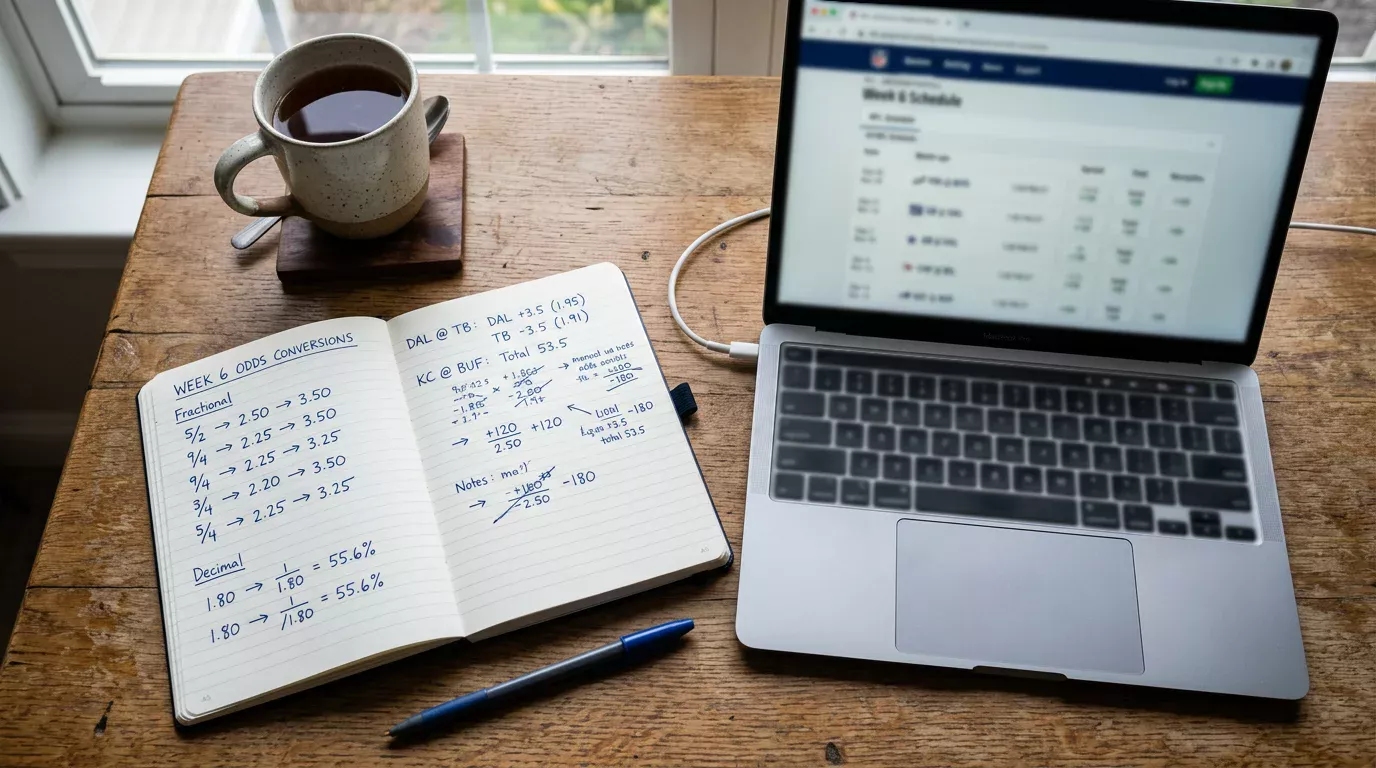
I used to keep a cheat sheet taped next to my monitor. These days the conversions are second nature, but let me give you the formulas so you can get there too.
Fractional to decimal: Divide the first number by the second and add 1. For 4/7: (4 / 7) + 1 = 1.571. For 11/8: (11 / 8) + 1 = 2.375.
Decimal to fractional: Subtract 1, then express as a fraction. For 1.571: 1.571 – 1 = 0.571, which is 4/7. For 2.375: 2.375 – 1 = 1.375, which is 11/8.
American to decimal (negative): Divide 100 by the absolute value of the American odds, then add 1. For -175: (100 / 175) + 1 = 1.571.
American to decimal (positive): Divide the American odds by 100, then add 1. For +137: (137 / 100) + 1 = 2.37.
Decimal to American: If the decimal is below 2.00, the team is favoured: -100 / (decimal – 1). For 1.571: -100 / 0.571 = -175. If the decimal is 2.00 or above, the team is the underdog: (decimal – 1) x 100. For 2.375: 1.375 x 100 = +137.
Here’s a practical example. You’re reading an American NFL preview that says the Dolphins are -110 on the spread. You want to know what that looks like in UK terms. Step one: (100 / 110) + 1 = 1.909 decimal. Step two: 1.909 – 1 = 0.909, which is roughly 10/11 fractional. So -110 American is 10/11 in the format you’re used to seeing at your bookmaker. A 20-pound bet at 10/11 returns 38.18 total — 18.18 profit plus the 20 stake.
Once you’ve done this a dozen times, you start recognising common American odds instantly. -110 is 10/11 (the standard vig line). +100 is evens. -200 is 1/2. +200 is 2/1. Build that mental library and you’ll never feel lost reading US-sourced NFL spread analysis again.
Implied Probability: What the Odds Are Really Telling You
Here’s the thing most odds guides never tell you: the number on the screen isn’t really an odds format. It’s a price tag on a probability estimate — and understanding that transforms how you bet.
Every set of odds can be converted into an implied probability, which is the bookmaker’s estimate (with margin baked in) of how likely an outcome is. The formula for decimal odds is straightforward: 1 divided by the decimal odds, multiplied by 100. At decimal 1.571 (our Chiefs example), the implied probability is (1 / 1.571) x 100 = 63.7%. The Bills at 2.375 carry an implied probability of (1 / 2.375) x 100 = 42.1%.
Add those together: 63.7% + 42.1% = 105.8%. That extra 5.8% above 100 is the bookmaker’s margin — the overround, or “vig” as Americans call it. It’s how the house makes money regardless of the result. In a perfectly fair market, both sides would add up to exactly 100%. In reality, the overround ranges from about 3% to 8% depending on the bookmaker and the market.
Why does this matter practically? Because when you find odds where the implied probability is lower than your own assessment of the true probability, you have what bettors call “value.” If you genuinely believe the Bills have a 48% chance of winning and the bookmaker’s implied probability is only 42.1%, that’s a value bet — the price is better than the true likelihood warrants. You won’t win every value bet, but over hundreds of wagers, betting at favourable prices compounds into profit.
I run implied probability calculations on every bet I place. It takes ten seconds and it’s the single best filter I have for separating “I think this team wins” from “this price is genuinely worth taking.” Once you start thinking in probabilities rather than just fractional numbers, you stop being a casual punter and start being a bettor with an edge — or at least the framework to find one.
The Numbers Speak Every Language
Whether your bookmaker shows 4/7 or 1.57 or -175, the underlying information is identical. The format is just clothing. What matters is the probability underneath it and whether the price you’re being offered reflects genuine value. Master the conversions, build the mental shortcuts, and you’ll move between UK, European, and American odds sources without friction — which means you’ll never miss a line worth taking just because it was dressed in an unfamiliar format.
Why do UK bookmakers sometimes show NFL odds in American format?
Some UK platforms display American odds on NFL markets because the lines originate from US sportsbooks where American format is standard. You can usually switch to fractional or decimal in your account settings. If the option isn’t visible, check the odds format toggle on the bet slip itself.
How do I calculate my potential payout from fractional NFL odds?
Multiply your stake by the fraction. At 11/8, a 16-pound stake returns (16 x 11/8) = 22 pounds in profit, plus your 16 stake back, for a total return of 38 pounds. For decimal odds, simply multiply your stake by the decimal number to get the total return including stake.
Learn more about bet nfl games on our main page.
You may also find NFL Over/Under Betting Tips — Totals Strategy for UK Punters interesting.
Prepared by the bet nfl Games editorial staff.