NFL Teaser Bets Explained — Adjusting Spreads and Totals
 Available in US
I placed my first teaser in 2019, on a two-team six-pointer featuring two heavy favourites sitting at -8 and -9. I moved them both through the key numbers of 3 and 7, watched both teams win comfortably, and thought I’d cracked the code. It took me another full season of mixed results to understand why that particular teaser worked — and why most of the others I placed didn’t. The teaser is one of the most misunderstood bet types in the NFL, and the gap between using it correctly and using it recklessly is the difference between a genuine mathematical edge and an expensive illusion of safety.
How Teaser Bets Work in the NFL
A mate of mine once described a teaser as “a parlay with training wheels.” He was half right. A teaser lets you adjust the point spread or total in your favour on two or more NFL selections, but every leg must win for the bet to pay out — just like a parlay. The difference is the price you pay for that adjustment: the odds on a teaser are significantly lower than on a standard parlay with the same number of legs.
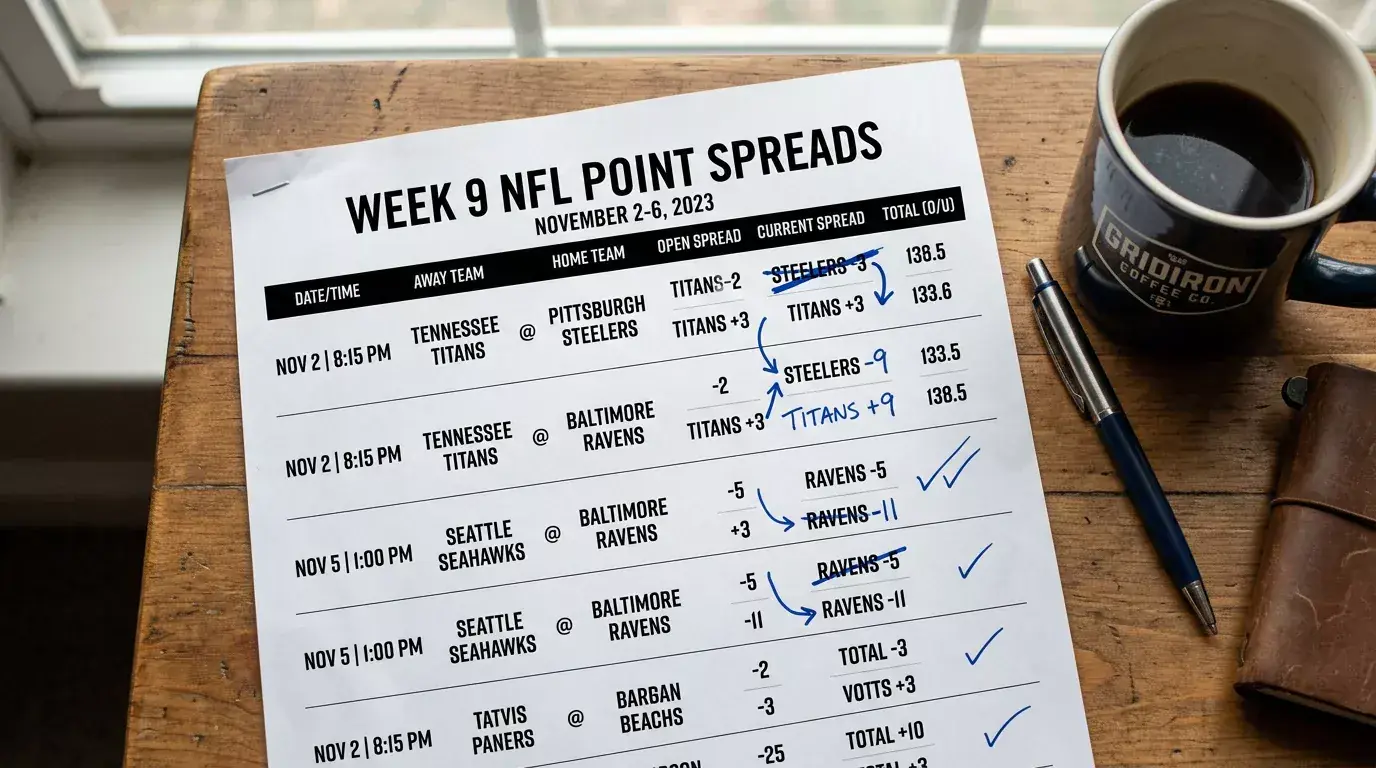
The standard NFL teaser offers a six-point adjustment. If the Chiefs are -7.5, a six-point teaser moves them to -1.5. If the total on a game is set at 47.5, you can tease it up to 53.5 or down to 41.5. The minimum number of legs is two, and most UK bookmakers that offer teasers allow up to six or seven legs, though the sweet spot — and I cannot stress this enough — is two.
At a typical bookmaker, a two-team six-point teaser pays around -110 in American odds, which translates to roughly 1.91 in decimal or 10/11 in fractional. Compare that to a two-team parlay at standard -110 odds, which pays around 2.64 decimal. You’re getting paid less, but you’re moving each line six full points in your direction. The question is whether that trade-off creates value or destroys it.
Some operators also offer 6.5-point and 7-point teasers at reduced odds, and “sweetheart” or “monster” teasers with 10 or 13 points of adjustment but three or more required legs. I’ve tested all of them. The only variant that holds up under scrutiny is the standard two-team, six-point teaser — and only in specific circumstances.
The Six-Point Teaser and Key Numbers
Why six points? Because NFL games cluster around specific margins of victory, and a six-point teaser is precisely wide enough to cross the two most important ones: 3 and 7. Across more than 33 London games and decades of domestic NFL data, favourites win outright roughly 65-67% of the time, and margins of exactly 3 or 7 points account for a disproportionate share of final results. Field goals worth 3 points and touchdowns with the extra point worth 7 are the fundamental scoring units in American football, and they shape the entire distribution of outcomes.
The classic “Wong teaser” — named after Stanford Wong, who published the mathematics behind it — targets favourites of -7.5 through -8.5 and underdogs of +1.5 through +2.5. Tease the -8 favourite down to -2, and you’ve crossed through both 7 and 3. Tease the +1.5 underdog up to +7.5, and you’ve given yourself a cushion that covers the two most common loss margins.
The numbers bear this out. When you tease through 3 and 7 simultaneously, each leg wins at a rate significantly above the roughly 72% break-even threshold needed for a two-team teaser at -110. When you tease a line that doesn’t cross these key numbers — say, moving a -3 favourite to +3, which crosses zero but only touches 3 from one side — the win rate drops below the threshold, and the bet becomes a long-term loser.
My rule is rigid: if the teaser doesn’t cross both 3 and 7 on at least one leg, I don’t place it. No exceptions. The temptation to tease a game because you “like the matchup” is exactly the kind of thinking that turns a mathematical tool into a gambling habit.
Teasers vs Parlays: When the Maths Favour Which
Parlays generated 22% of total US bookmaker handle in 2024 with an average hold rate above 15% — meaning bookmakers kept fifteen pence of every pound wagered on them. That hold rate is roughly double the hold on straight bets. Teasers sit somewhere between the two, but only if you use them correctly.
Here’s the core comparison. A two-team parlay at -110 per leg pays 2.64 and requires each leg to win at roughly 52.4% — so you need a combined probability of about 27.5% to break even. A two-team six-point teaser at -110 pays 1.91 and requires a combined probability of about 52.4% to break even, which means each leg needs to win at around 72.4%.
The question is whether moving a line six points lifts your win probability from the 52-53% range (where you need to be for a straight bet) past 72%. On a Wong teaser — crossing through both 3 and 7 — historical data suggests individual leg win rates in the 75-80% range, putting you above the threshold. On a random teaser with no regard for key numbers, leg win rates tend to cluster around 68-70%, which falls short.
Parlays reward conviction about independent outcomes. If you have strong opinions on three separate games, a parlay lets you leverage those opinions. Teasers reward a different kind of knowledge: understanding which specific lines are ripe for a six-point adjustment because they sit in the right numerical window. One bet type isn’t inherently superior to the other. They answer different questions, and the sharper question is always “which tool fits this situation?”
I use teasers sparingly — perhaps two or three times across a full NFL Sunday, and only when the right lines present themselves. If a week doesn’t produce any Wong-eligible lines, I place zero teasers. That restraint is the entire strategy.
The Six-Point Window That Earns Its Keep
Teasers get a bad reputation because most people use them the way they use parlays: as lottery tickets with slightly better odds. Stack five or six legs, watch the combined payout climb, and hope for the best. That approach fails for the same reason five-leg parlays fail — the compounding effect of even small edges against you is devastating over time.
The teaser is a precision instrument, not a blunt one. Two legs, six points, crossing 3 and 7. Everything else is noise. If you can internalise that discipline, you have one of the few bet types in NFL wagering where the mathematics genuinely lean in the bettor’s direction. If you can’t, the teaser will drain your bankroll just as efficiently as any other accumulator — just with the added frustration of feeling like you were “close” every time.
How many legs do I need in an NFL teaser?
The minimum is two legs. While bookmakers allow more, the mathematical edge of a teaser diminishes with each additional leg. Two-team six-point teasers targeting key numbers of 3 and 7 offer the strongest long-term value.
Are teaser bets available at UK bookmakers?
Not all UK bookmakers offer teasers as a standalone product. Some operators list them under alternative bet types or special markets during the NFL season. Check the NFL section of your bookmaker’s app or contact their support team to confirm availability.
Learn more about bet nfl games on our main page.
You may also find NFL Thanksgiving Betting UK — Odds and Strategy for the Triple-Header interesting.
Written by the editors at bet nfl Games.