AI in NFL Betting — How Technology Is Changing the Odds
 Available in US

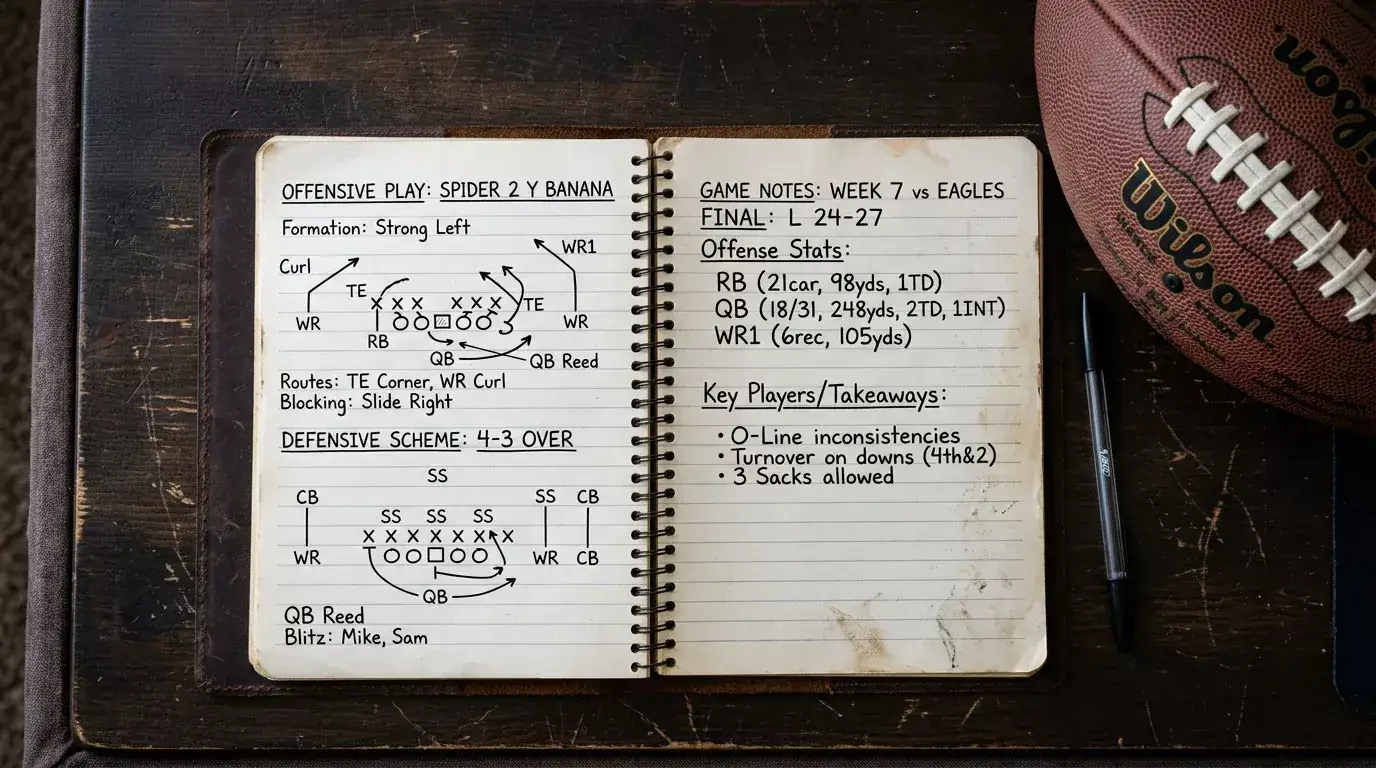
The odds on your screen didn’t come from a person sitting in a back office with a calculator. They came from a machine learning model that ingested thousands of data points — player tracking data, historical play-by-play, weather forecasts, injury probabilities, public betting percentages — and produced a price in milliseconds. The NFL betting market in 2026 is an AI-driven market, whether you notice it or not. Understanding how that technology works changes how you approach every bet.
How AI Sets and Adjusts NFL Odds in Real Time
DraftKings acquired Simplebet, an AI micro-betting company, in August 2024. That acquisition wasn’t about adding a product feature — it was about fundamentally changing how odds are generated. Simplebet’s technology uses machine learning models to predict the outcome of individual NFL plays: the probability of a completion, a sack, a first down, a touchdown. Those play-level probabilities feed into the broader game-level odds, creating a pricing engine that updates with every snap.
Traditional oddsmaking relied on human traders who set opening lines based on power ratings, adjusted for public money, and manually corrected for major information changes (injuries, weather, lineup announcements). AI-driven oddsmaking automates most of that process. The model ingests real-time data — Next Gen Stats player tracking, snap-by-snap play sequences, historical performance under similar conditions — recalculates probabilities continuously, and adjusts the line without human intervention. Human traders still oversee the output and can override the model in unusual circumstances, but the heavy lifting is algorithmic.
For UK bettors, this means the odds you see on your app are more accurate, more responsive, and harder to beat than they were five years ago. The window between a line being “wrong” and the model correcting itself has shrunk from hours to minutes, and in live markets, from minutes to seconds. Finding value in 2026 requires either superior information (which the model doesn’t have) or superior interpretation of information the model has already processed (which is harder but not impossible).
Micro-Betting: AI-Powered Wagering on Every Single Play
Micro-betting is the logical endpoint of AI-driven oddsmaking: a market for every play, every drive, every possession. Will the next play be a run or a pass? Will this drive result in points? Will the quarterback be sacked on this snap? These markets appear and disappear in the 40-second window between plays, priced by AI models that factor in down, distance, field position, game situation, and historical tendencies for the specific players and formations on the field.
In the US, micro-betting is growing rapidly and is already available at several major operators. In the UK, the product is still emerging. Some UKGC-licensed operators offer drive-result and next-score markets during live NFL betting, which are a step toward micro-betting, but the play-by-play granularity that Simplebet enables hasn’t fully crossed the Atlantic yet.
The appeal for bettors is obvious: more markets mean more opportunities to find value. The risk is equally obvious: more markets mean more opportunities to lose money through overtrading. Micro-betting is designed for engagement — the rapid cycle of bet-result-bet-result is psychologically compelling in a way that a pre-match spread bet is not. If you’re going to engage with micro-betting once it arrives in the UK, the bankroll discipline and pre-game planning I’ve written about elsewhere on this site become non-negotiable.
The speed at which micro-betting markets open and close also raises a practical question about latency. If your app takes five seconds to load a market that exists for twenty seconds between plays, you’ve already lost a quarter of your decision window. The operators who invest in low-latency infrastructure will dominate this space, and UK bettors will need to evaluate their app’s performance against this standard.
What AI Means for the Average UK NFL Bettor
The practical implications cut both ways. On the one hand, AI-driven odds are fairer: they’re more accurate reflections of true probability, which means you’re less likely to be exploited by a badly priced line. On the other hand, AI-driven odds are harder to beat: the inefficiencies that sharp bettors used to exploit — stale lines after injury news, slow adjustments to weather changes, predictable public-money bias — have been compressed or eliminated entirely.
Betting advertising on US linear television fell approximately 7% year-on-year to $442.5 million in 2025, partly because operators are shifting spend from acquisition to technology. The money that used to go into attracting new bettors with aggressive bonuses is increasingly going into the AI and data infrastructure that prices the markets. This trend will continue, and the UK market will follow.
For the average UK NFL bettor, the takeaway is pragmatic: the edge in 2026 doesn’t come from access to information (the AI has more data than you’ll ever process), but from situational judgement. Knowing how teams behave in specific contexts — after a bye, in a divisional rivalry, in a primetime game against a specific defensive scheme — is the kind of nuanced understanding that AI models are improving at but haven’t mastered. Human bettors who develop deep situational knowledge in narrow areas can still find value. Human bettors who try to outprocess the model across every market will lose.
AI is not the enemy of the informed bettor. It’s the terrain. The sharps who adapted to electronic trading in financial markets didn’t disappear — they specialised. The same evolution is happening in NFL betting. Specialise in what you know, acknowledge what the machine knows better, and allocate your bankroll accordingly. The bettors who thrive in an AI-driven market won’t be the ones who try to replicate what the model does. They’ll be the ones who identify what it can’t do yet — reading coaching tendencies under pressure, anticipating scheme changes after a bye week, understanding locker-room dynamics after a mid-season trade — and exploit those gaps with disciplined, well-sized wagers.
Can I use AI tools to predict NFL outcomes?
Consumer-facing AI prediction tools exist, ranging from free model-based pick services to paid subscriptions. Their accuracy varies widely, and none consistently outperform the market over large sample sizes. Treat AI predictions as one input among many, not as a replacement for your own analysis.
Is AI-driven micro-betting available at UK bookmakers?
Full play-by-play micro-betting is not yet widely available at UKGC-licensed operators. Some UK bookmakers offer drive-result and next-score markets during live NFL games, which are a step toward micro-betting. The product is expected to expand as operators invest in real-time pricing technology.
Prepared by the bet nfl Games editorial staff.