NFL Betting Mistakes — Common Errors UK Punters Should Avoid
 Available in US
I’ve made every mistake on this list. Some of them more than once. The difference between a bettor who survives their first NFL season and one who doesn’t isn’t talent — it’s the speed at which they recognise these patterns in their own behaviour and correct them. Consider this a field guide to the errors that cost UK punters the most money, written by someone who learned them the expensive way.
Chasing Losses After a Bad Sunday
The worst decisions in NFL betting happen on Sunday evening after a losing afternoon. You’re down, the Monday Night Football game is sitting there on your screen, and the temptation to recover by doubling your stake on a game you haven’t researched is overwhelming. This is chasing losses, and it’s the single fastest way to destroy a bankroll.
Chasing is a behavioural response, not a strategic one. The losses from the afternoon don’t change the probability of the Monday night outcome. But they change how you feel, and when your stake size is driven by emotion rather than analysis, you’re no longer betting — you’re gambling in the purest and most destructive sense. An estimated 2.7% of UK adults meet the clinical threshold for problem gambling, and chasing losses is one of the earliest and most consistent behavioural indicators.
The antidote is structural, not motivational. Set your unit size before the season starts and don’t deviate. A losing Sunday doesn’t increase your Monday unit. Bill Miller of the American Gaming Association has urged bettors to have a game plan before placing a bet, ensuring the experience remains enjoyable regardless of outcome. That game plan includes the commitment to walk away from a losing day without compounding it.
The Parlay Trap: Why Accumulators Drain Bankrolls
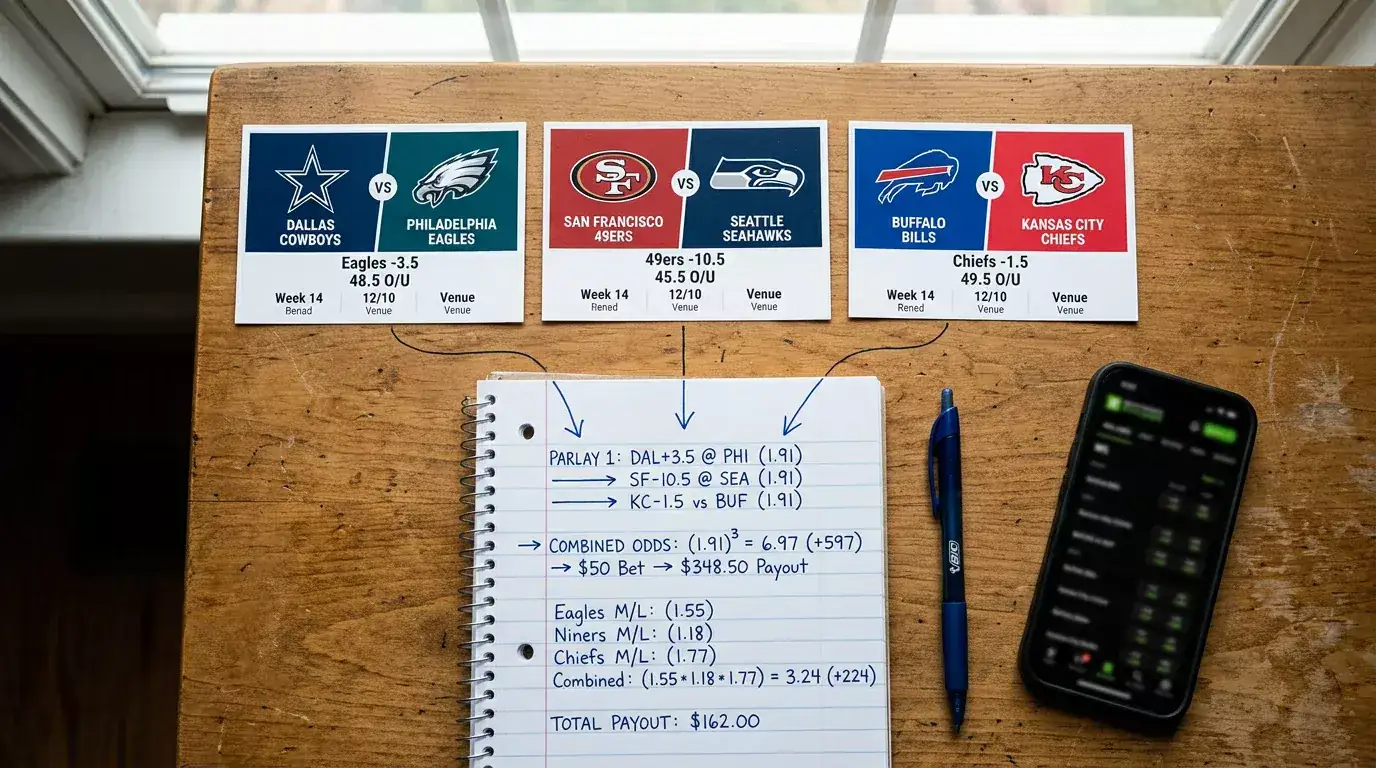
Parlays are the most popular bet type among recreational NFL bettors and the most profitable product for bookmakers. That combination should tell you everything. Parlay bets accounted for 22% of total US bookmaker handle in 2024, but the average hold rate on parlays exceeds 15% — more than double the hold rate on straight bets. The bookmaker is making twice as much margin on your accumulator as on your single.
The mathematics are straightforward: in a parlay, you’re multiplying probabilities. A four-leg parlay where each leg has a 55% chance of winning has an overall win probability of just 9.15%. Even with the amplified payout, the expected value is negative because the bookmaker’s vig compounds across each leg. I’m not saying never place a parlay — I’m saying understand the maths before you make it a habit. If accumulators form the core of your NFL betting strategy, you’re volunteering to pay a premium to the bookmaker on every wager.
Betting on Teams Instead of Numbers
Every NFL bettor has a favourite team, and most have opinions about which teams are “good” and which are “bad.” Those opinions become expensive when they replace analysis. Betting on the Chiefs because they’re the Chiefs, or against the Panthers because they’re the Panthers, is betting on narrative rather than the number in front of you.
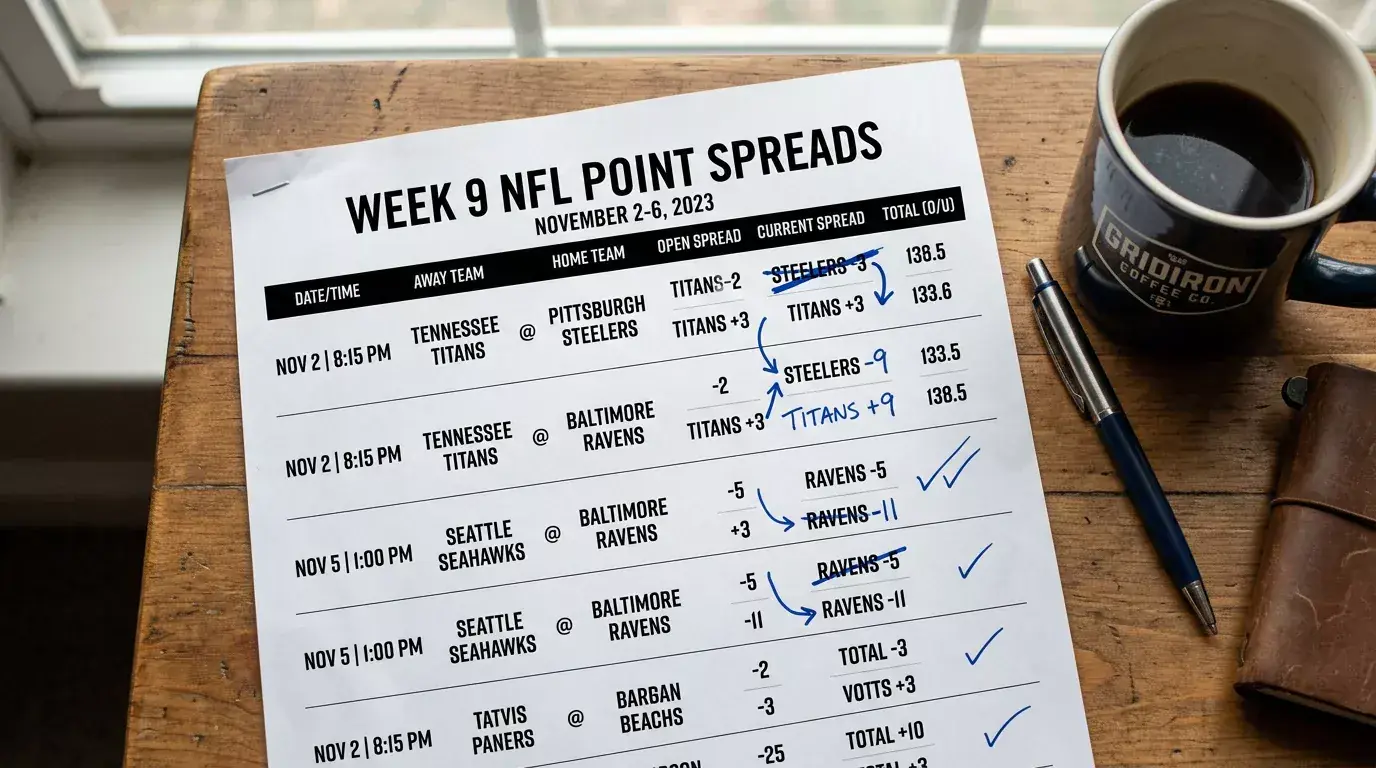
The spread exists to equalise the matchup. A -7.5 spread on the Chiefs means the bookmaker believes the Chiefs are likely to win by around a touchdown, and the question isn’t whether the Chiefs are good — it’s whether they’re good enough to cover that specific number in this specific game. I’ve seen sharp bettors back teams they consider terrible because the spread offered more value than the matchup warranted. The team you back on the betting slip doesn’t need to be the team you’d cheer for. It needs to be the team the number says is undervalued.
Narrative Bias: When Stories Override Statistics
The NFL is a content machine. Every game comes wrapped in storylines — revenge narratives, quarterback controversies, coaching hot seats, contract year performances. These narratives are entertaining, and they drive public opinion. They’re also largely useless for predicting outcomes.
A quarterback “playing for a new contract” is a compelling story, but the evidence that contract-year motivation translates into measurable on-field improvement is thin at best. A team “coming off a humiliating loss” might play with more intensity — or it might face the same structural problems that caused the humiliation in the first place. A coach on the “hot seat” might inspire a siege mentality, or he might have lost the locker room entirely. I treat narratives as noise to be filtered out, not signals to be acted on. The data — DVOA, EPA, injury reports, situational factors — tells you what’s likely to happen. The narrative tells you what people want to believe will happen. Those are two very different things, and confusing them is one of the most expensive habits in the market.
Not Tracking Your Bets
If you don’t track your bets, you don’t know whether you’re winning. It sounds obvious, but the majority of recreational NFL bettors operate without any record of their activity. They remember the big wins and forget the steady stream of small losses, creating a distorted self-image that allows bad habits to persist unchecked.
A simple spreadsheet — date, game, bet type, odds, stake, result, profit/loss — transforms your betting from an activity into a measurable practice. After one season of consistent tracking, you’ll know your win rate by bet type, your return on investment, and which markets are profitable versus which ones are costing you money. You’ll also see patterns you’d never notice without data: perhaps you’re profitable on spreads but losing money on totals, or your Thursday Night Football record is significantly worse than your Sunday results. That data is the foundation of every improvement you’ll make. Without it, you’re guessing — and bankroll management without data is just wishful accounting.
What is the single biggest mistake NFL bettors make?
Chasing losses — increasing stake size after a losing session to try to recover quickly. This behaviour turns a manageable losing day into a bankroll-threatening spiral and is one of the earliest indicators of problem gambling. Set a fixed unit size before the season and maintain it regardless of short-term results.
How do I stop chasing losses on NFL bets?
The most effective approach is structural: set a non-negotiable unit size (1-3% of your bankroll) before the season starts and commit to it in writing. Remove yourself from the betting environment after a losing Sunday — close the app, step away from the screen. The Monday Night game will still be there tomorrow.
Discover everything about bet nfl games here.
Check out our guide on NFL Betting Sites UK — UKGC-Licensed Platforms Compared as well.
Created by the ”bet nfl Games” editorial team.