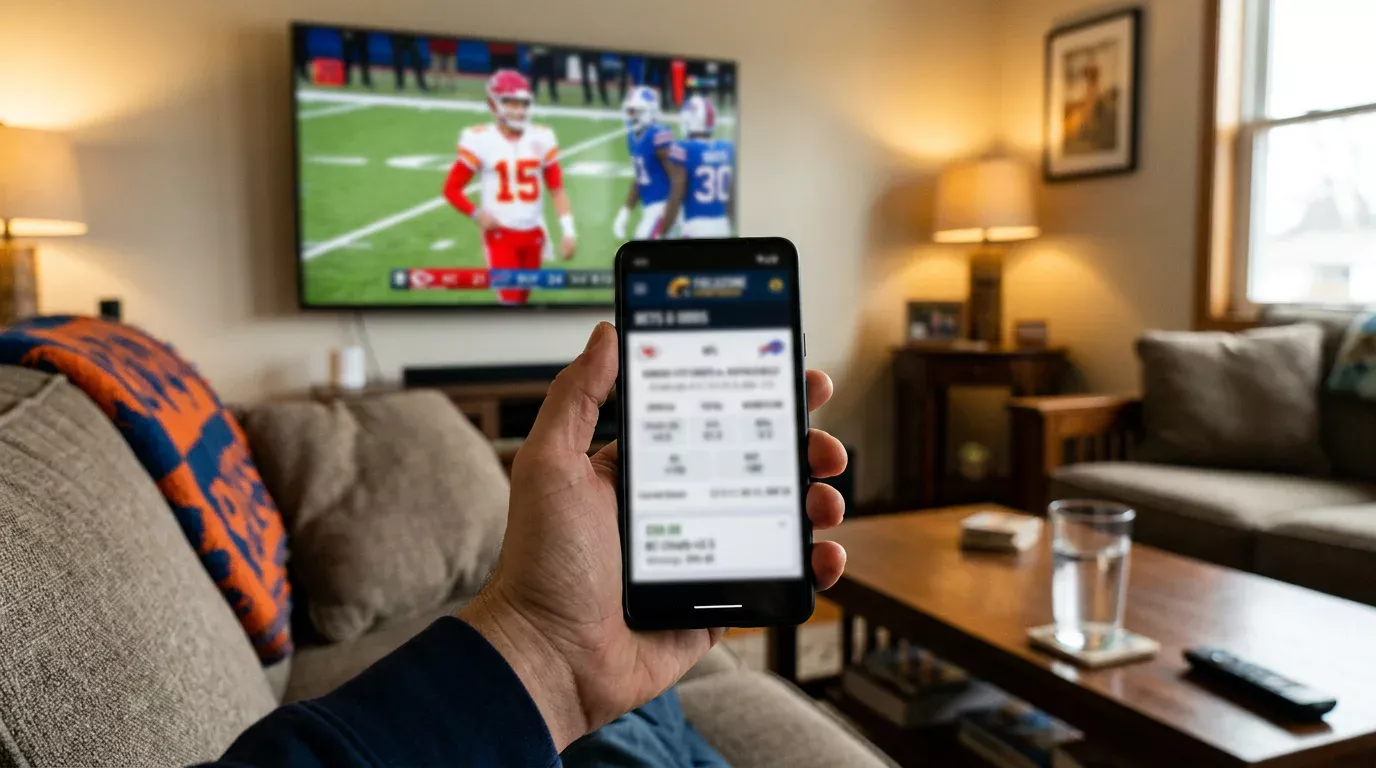
NFL Betting Bankroll Management — Formulas and Systems
 Available in US
The most profitable NFL bettor I know has a career win rate of 54.2%. That’s it — barely above the break-even threshold of 52.4% for standard -110 bets. What separates him from the majority who lose isn’t his ability to pick winners. It’s his refusal to let a single losing week derail the next six months. Bankroll management isn’t a footnote to NFL betting strategy. It is the strategy. Everything else is selection.
Flat Betting: The Foundation of Bankroll Discipline
Flat betting means wagering the same fixed amount on every single bet, regardless of confidence level. If your bankroll is £500 and you set your unit at 2% — which is £10 — then every NFL bet you place is a £10 bet. The Sunday triple-header you feel great about? Ten pounds. The Thursday Night Football game you’re lukewarm on but still see value in? Ten pounds. No exceptions.
This approach solves the most common and most expensive problem in recreational NFL betting: variable sizing based on emotion. Americans wagered $30 billion on the 2025 NFL season through legal bookmakers alone, and a significant chunk of that handle was lost by bettors who sized their wagers according to how they felt about a game rather than according to a system.
The mathematics of flat betting are protective. If you risk 2% of your bankroll per bet and hit a ten-bet losing streak — which happens more often than most people expect across a 23-week season — you’ve lost 20% of your bankroll. That’s painful but survivable. Compare that to a bettor who “goes big” on their best picks at 10% per bet: a ten-bet losing streak wipes out 65% of their bankroll due to compounding, and recovery becomes near-impossible without depositing fresh funds.
I recommend flat betting to anyone who’s been in the NFL market for fewer than three seasons. It strips away the noise, eliminates emotional sizing, and forces you to focus on the one thing that matters: your selection accuracy over time. If your overall win rate across 200+ tracked bets is above 53%, flat betting will grow your bankroll. If it’s below 52%, flat betting will tell you that clearly — and that clarity is worth more than any single winning weekend.
Percentage Staking: Scaling With Your Bankroll
Once you’ve established a track record with flat betting, percentage staking offers a natural evolution. Instead of risking a fixed pound amount, you risk a fixed percentage of your current bankroll on each bet. As your bankroll grows, your unit size grows with it. As it shrinks, your unit size contracts, automatically protecting you during losing streaks.
The formula is straightforward: bet size = current bankroll x stake percentage. If your bankroll is £600 and your stake percentage is 2%, your bet is £12. If a losing week drops your bankroll to £540, your next bet is £10.80. If a winning week lifts it to £660, your next bet is £13.20. The system breathes with your results.
The advantage over flat betting is that percentage staking accelerates growth during winning periods and decelerates losses during downswings. The disadvantage is that it requires more active management — you need to recalculate your unit before each bet, and your bet sizes change constantly. I find this manageable if I update my bankroll total once a week (every Monday morning, after the weekend’s results settle) rather than after every individual bet.
The stake percentage you choose matters enormously. At 1%, you’re conservative — it takes a very long losing streak to cause serious damage, but your growth during winning periods is slow. At 3%, you’re aggressive — growth compounds faster, but a sustained downswing can eat through your bankroll before you have time to adjust. I use 2% as my baseline and have for the past five seasons. It’s the Goldilocks point for NFL betting, where the growth-protection balance feels right across a full season.
The Kelly Criterion Applied to NFL Betting
The Kelly Criterion is a mathematical formula that calculates the optimal percentage of your bankroll to wager based on your estimated edge. The formula is: Kelly % = (bp – q) / b, where b is the decimal odds minus 1, p is your estimated probability of winning, and q is the probability of losing (1 – p).
Here’s a worked example. You believe a particular NFL spread has a 55% chance of covering (your p = 0.55, q = 0.45). The odds are 1.91 decimal (standard -110). Plugging into the formula: b = 0.91, Kelly % = (0.91 x 0.55 – 0.45) / 0.91 = 0.0549, or about 5.5% of your bankroll.
That sounds elegant, and it is — in theory. In practice, Kelly has two serious problems for NFL bettors. First, it requires you to accurately estimate your probability of winning, which is the hardest part of the entire enterprise. If your estimated 55% is actually 52%, Kelly tells you to overbet. Second, full Kelly produces enormous variance. A string of unlucky results at full Kelly can draw down your bankroll by 40–50% before the mathematical edge reasserts itself.
The practical solution is fractional Kelly — typically half-Kelly or quarter-Kelly. At half-Kelly, the example above becomes a 2.75% bet instead of 5.5%. You sacrifice some long-term growth for a dramatic reduction in short-term variance, which is the right trade-off for anyone who doesn’t have the stomach (or the bankroll) to ride out full Kelly’s swings.
I use half-Kelly on my highest-conviction plays — games where my model gives me a clear probability edge — and flat 2% on everything else. This hybrid approach gives me the strategic flexibility to press an advantage without abandoning the discipline of consistent sizing on standard bets.
Setting Up a Bet-Tracking Spreadsheet
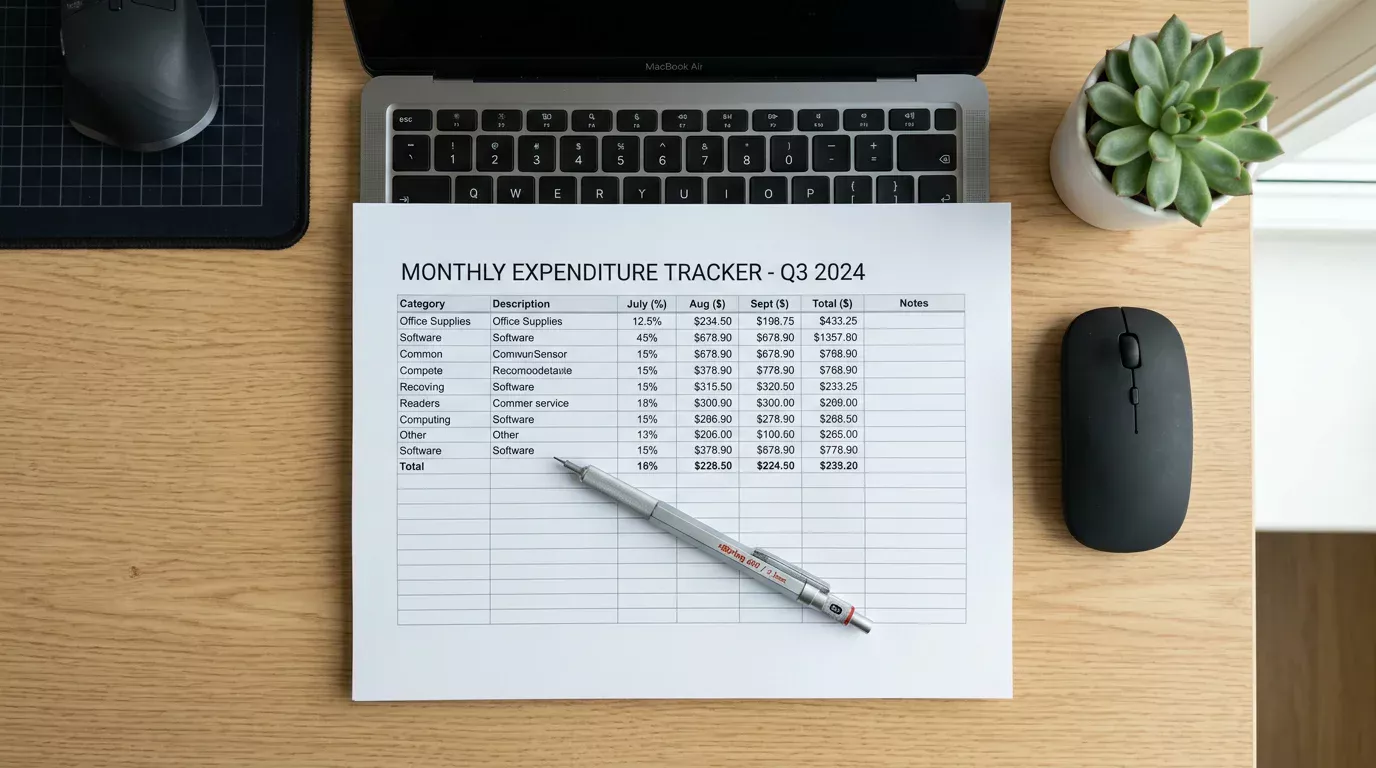
None of this works without a record. Every bet you place should be logged with: date, game, bet type, odds, stake, result, and profit/loss. From these fields, you can calculate your running win rate, your return on investment (profit divided by total staked), and your performance by bet type (spreads vs totals vs props vs parlays). Parlay bets account for 22% of total US bookmaker handle but carry a hold rate above 15% — tracking your own results by bet type will tell you whether you’re contributing to that statistic or beating it.
A simple spreadsheet works. I’ve tried dedicated tracking apps, and most add complexity without adding insight. The discipline of manually entering each bet forces you to confront every decision — the good ones, the bad ones, and the ones you’d rather forget. That confrontation is the point. After three months of consistent tracking, your spreadsheet will tell you more about your NFL betting ability than any tipster, any forum, or any gut feeling ever could.
How much should a beginner’s NFL betting bankroll be?
Start with an amount you can afford to lose entirely without affecting your daily life. For most UK beginners, that’s somewhere between 100 and 500 pounds. The exact figure matters less than the commitment to treating it as your total seasonal budget and sizing your bets as a small percentage of it.
When should I increase or decrease my NFL bet size?
If you use percentage staking, your bet size adjusts automatically as your bankroll changes. If you use flat betting, reassess your unit size at natural breakpoints: the start of each month, after a significant bankroll milestone (up or down 25%), or at the transition from regular season to playoffs.
Find the best options for bet nfl games.
Read our detailed review of NFL Betting Bonuses UK — Types, Terms, and What to Expect
Prepared by the bet nfl Games editorial staff.