NFL Betting Strategy — Data-Driven Tips for UK Punters
 Available in US
Table of Contents
- Why Bankroll Discipline Underpins Every Strategy
- Line Shopping Across UK Bookmakers
- Situational Handicapping: Bye Weeks, Short Weeks, and Travel
- Betting the NFL Calendar: Preseason to Super Bowl
- Tracking Your Bets and Reviewing Performance
- Strategy Traps: Chasing Losses, Parlays-Only, and Narrative Bias
- Building a System That Survives a Full Season

My first full NFL season as a bettor ended with a 3% loss on my starting bankroll. Not catastrophic, but not the profit I’d imagined when I started placing bets every Sunday in September. The frustrating part wasn’t the number — it was realising that I’d actually picked more winners than losers. My record was 54% against the spread, which should have been profitable. The problem was structural: inconsistent stakes, too many parlays on whim, and zero tracking beyond a vague sense of how things were going.
That offseason I rebuilt everything from the ground up. Flat staking. A spreadsheet for every bet. Line shopping across four bookmakers instead of using one. The next season, with a nearly identical win rate, I finished 9% up. The handicapping hadn’t changed. The strategy had.
This is the guide I wish I’d had before that first season. NFL betting strategy for UK punters isn’t about secret picks or insider tips. It’s about building a framework that turns moderate skill into consistent returns — and prevents the structural mistakes that turn winning records into losing bankrolls. The American Gaming Association estimated $30 billion was legally wagered on the 2025 NFL season alone, an 8.5% increase from the prior year. There’s an ocean of money in this market. Strategy determines whether you’re swimming in it or drowning.
Why Bankroll Discipline Underpins Every Strategy
There’s a question I ask every punter who tells me they have a “system” for NFL betting: how much do you risk per bet, and why that amount? The silence that follows tells me everything. Most bettors have opinions on games. Almost none have a staking plan.
Bankroll discipline is the infrastructure beneath every other strategic decision. Without it, your handicapping skill is irrelevant. A 57% win rate — genuinely elite in NFL spread betting — will produce a losing season if you’re staking 10% of your bankroll on every bet, because the variance in a 17-week season is more than enough to wipe out your edge during an inevitable cold streak.
The principle is simple: risk a fixed, small percentage of your total bankroll on each bet. I use 2% as my standard unit. On a 500-pound bankroll, that’s 10 pounds per bet. Not exciting. Not designed to be exciting. Designed to keep me in the game through weeks 6, 7, and 8 when I might go 2-5 against the spread and the temptation to “go bigger to recover” is strongest. Bill Miller, President of the American Gaming Association, put it well when discussing responsible engagement: strong consumer protections and a commitment to responsibility ensure that the experience remains enjoyable regardless of outcome. That philosophy applies equally to individual bankroll management. Your betting should remain sustainable and enjoyable after a losing week, not just after a winning one.
For a deeper dive into specific staking models — flat betting versus percentage staking versus the Kelly Criterion — I’ve written a dedicated breakdown covering bankroll management formulas and systems. The core message is this: decide your unit size before the season starts, and don’t change it because of a single result. Adjust quarterly if your bankroll has grown or shrunk meaningfully, but never mid-week and never after a bad beat. Discipline is boring. Boring compounds.
Line Shopping Across UK Bookmakers
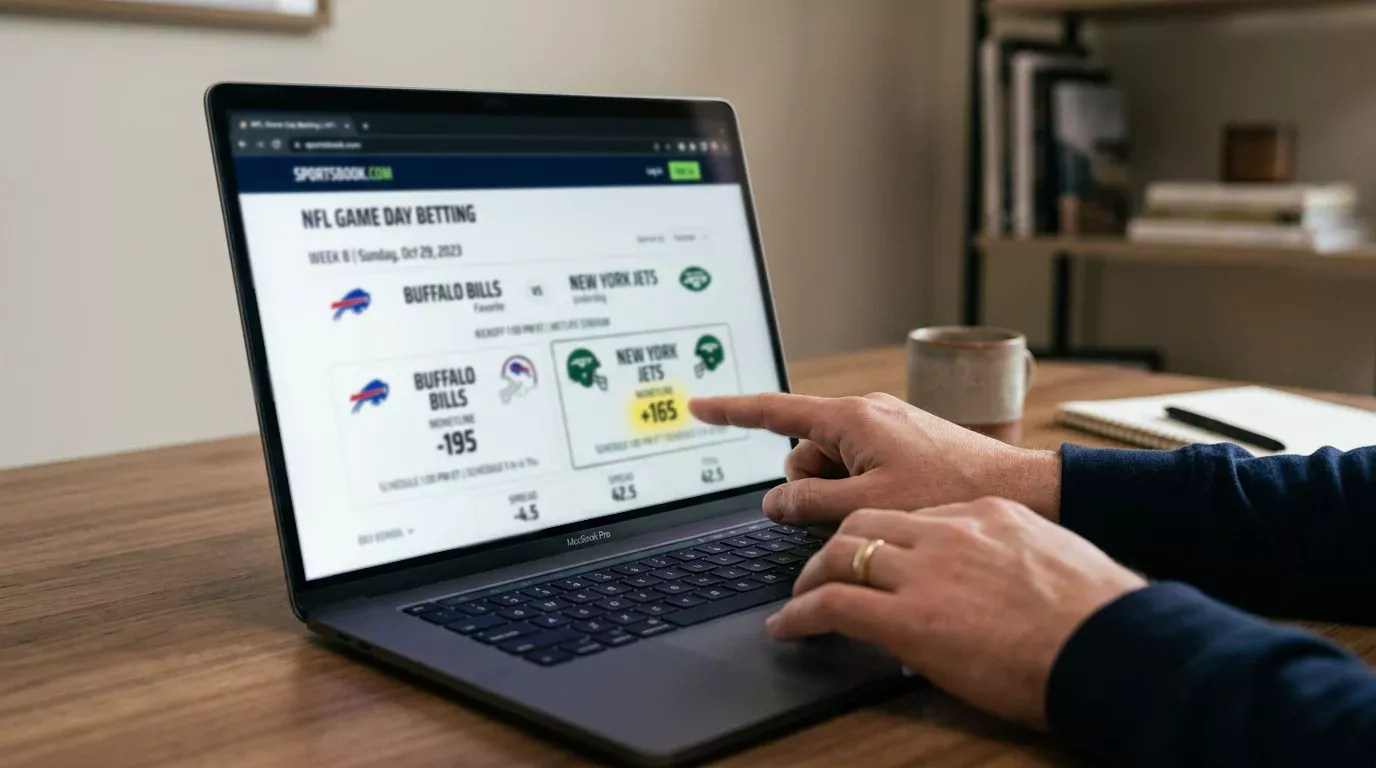
I once found a full point of difference on an NFL spread between two UKGC-licensed bookmakers — same game, same kickoff time, one offering -3 and the other -4. That single point, on a game that landed on a margin of three, was the difference between a push and a loss. It took me 30 seconds to check the second platform. Thirty seconds for a free edge.
Line shopping is the simplest strategic advantage available to a UK NFL bettor, and it requires no handicapping skill whatsoever. You’re not predicting games better. You’re buying the same product at a lower price. The UK market has over 13.5 million active online betting accounts per month across all sports, spread across dozens of UKGC-licensed operators. Each operator sets its own NFL lines, and those lines diverge — especially early in the week, before the market converges.
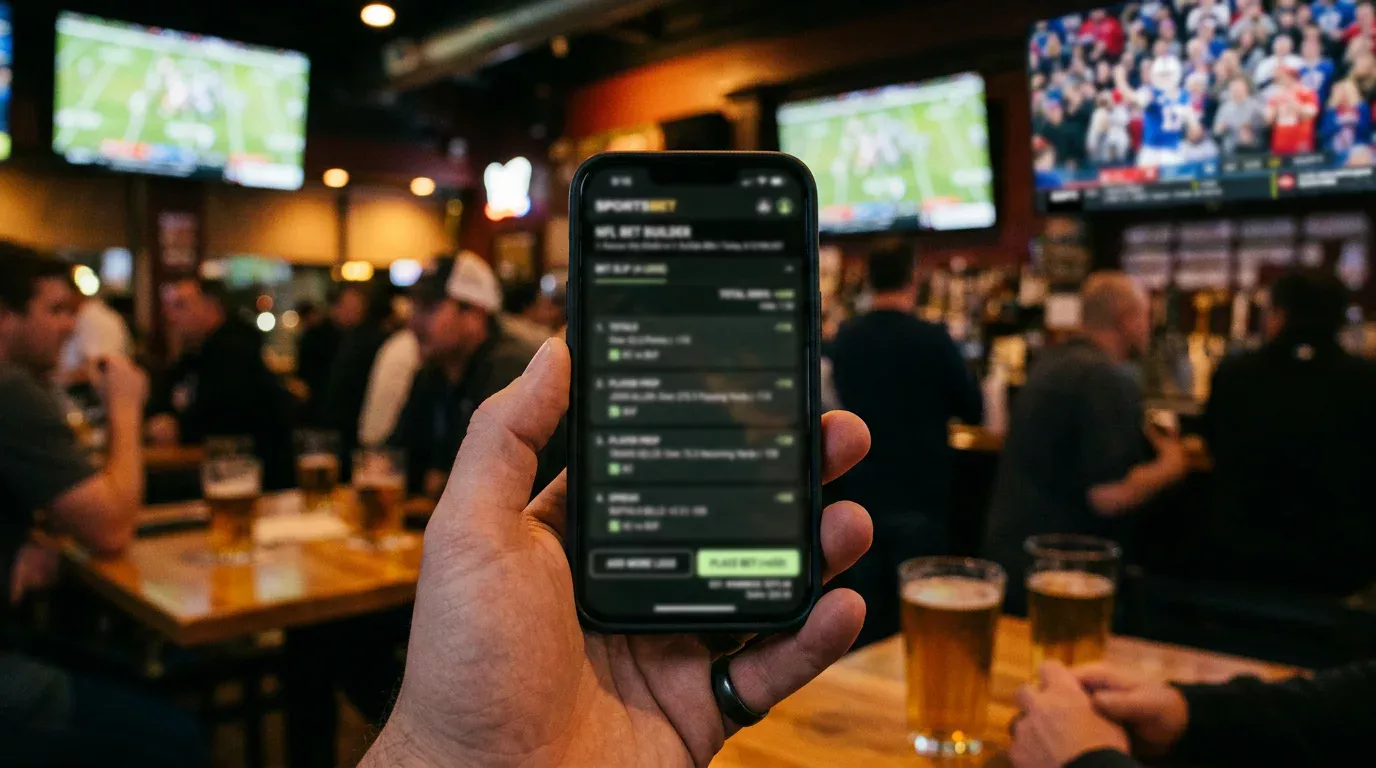
My workflow is straightforward. I identify the games I want to bet by Wednesday. I then check the spread and price at four platforms: two large UK-native operators and two with US-affiliated odds engines. On a typical NFL week, I find a half-point or better difference on at least three of the games I’m considering. Over a full season — roughly 80-100 bets for me — those half-points compound into a measurable improvement in win rate.
The cost of line shopping is trivial: maintaining multiple accounts (which most UK punters already do for welcome offers) and spending an extra two minutes per bet. The return is structural. You’re not guessing better. You’re paying less for the same position. In a market where the edge between profitable and unprofitable bettors is measured in single percentage points, line shopping is the closest thing to free money this side of a matched bet.
One nuance for UK punters specifically: some bookmakers display NFL spreads in half-point increments only, while others offer whole-number spreads with adjusted pricing. A -3 at 5/6 and a -3.5 at 10/11 are different bets with different risk profiles, even though they look similar on the surface. When shopping, compare the number and the price together, not independently. The “best” line is the one that gives you the highest expected value for the position you want to take, which sometimes means accepting a slightly worse number at a significantly better price.
Situational Handicapping: Bye Weeks, Short Weeks, and Travel
The best NFL bet I placed last season wasn’t based on a matchup analysis or a statistical edge. It was based on a calendar. A team coming off their bye week, fully rested, facing a divisional rival playing their third game in 12 days. The spread didn’t reflect the fatigue differential. It rarely does early in the week, because the market prices talent and matchup before it prices circumstance. By kickoff, the line had moved two points in my direction. Situational handicapping had done the work before I’d even watched film.
Situational spots are recurring schedule-based patterns that influence NFL outcomes. They’re not guarantees — nothing in betting is — but they represent structural advantages that the market consistently underprices. The most reliable ones I track:
Teams coming off a bye week have an extra week of rest, preparation, and game-planning. Historically, bye-week teams cover at a rate meaningfully above 50%. The edge has shrunk over the years as the market has wised up, but it still exists, particularly when the bye-week team is an underdog. The market tends to fully price the favourite’s bye advantage but undercount it for underdogs.
Short-week games — primarily Thursday Night Football — punish teams that played the previous Sunday, especially if that Sunday game went to overtime or involved significant travel. The team with more rest on a Thursday night has a quantifiable edge. I weight this factor heavily when the short-rest team is also travelling, because the compounding effect of fatigue plus travel is larger than either factor alone.
Travel is the third pillar, and it’s particularly relevant for NFL London Games. More than 33 international games have been played in London since 2007, and favourites have covered at 65.6% — essentially matching the NFL-wide rate. What the aggregate number masks, though, is the travel asymmetry. When one team arrives in London on Tuesday and the other on Thursday, the early-arriving team has a rest advantage that the spread rarely accounts for. West Coast teams crossing eight time zones to play a 2:30pm London kickoff face a body-clock challenge that East Coast teams, crossing only five zones, do not. I’ve found value consistently on the better-rested side of London Games, even when the spread appears fair on paper.
The broader principle of situational handicapping is this: the market prices what happened last week and who the teams are. It’s slower to price how the schedule, travel, and rest profile affect the teams this week. That lag is your window.
Betting the NFL Calendar: Preseason to Super Bowl
Not all NFL weeks are created equal for bettors. The 12-month calendar has distinct phases, each with its own market characteristics and value windows. Treating the season as a flat stretch of identical Sundays is like treating every hand at a poker table the same — technically possible, but strategically negligent.
The offseason (February through August) is futures territory. Super Bowl winner, conference champions, division winners, MVP, and individual stat milestones all open for betting months before kickoff. The earlier you place a futures bet, the wider the odds — but the less information you have. I find the sweet spot sits in late April, after the NFL Draft, when rosters have taken shape but the market hasn’t fully adjusted. A team that drafts a franchise quarterback will see its Super Bowl odds shorten within hours. If you’ve anticipated the pick, the pre-draft price is your edge.
Weeks 1-4 of the regular season are the noisiest period for spread bettors. Oddsmakers are working from projections rather than current-season data. Overreaction to single games is rampant: a team that loses week 1 by three touchdowns might see its week 2 spread move four points too far. These early weeks favour contrarian approaches — fading the public’s knee-jerk response to a single result.
The mid-season grind (weeks 5-12) is where the market is sharpest. Enough data exists for models to calibrate, and casual bettors have either settled into patterns or dropped off. Finding edges here requires deeper work: situational handicapping, injury-report analysis, and line-movement tracking. This is also the period where I’m most disciplined about volume, typically betting four to five games per week instead of the six or seven I might attempt early in the season.
The stretch run (weeks 13-18) introduces motivation as a variable. Teams locked into playoff seeding rest starters. Teams eliminated play loose with nothing to lose. Teams fighting for the final wildcard spot play with desperate intensity. The spread market is slower to price motivation than it is to price talent, which creates late-season pockets of value — particularly in week 17 and 18 matchups where one team’s playoff positioning is already settled.
The playoffs are a different beast entirely. Smaller sample (13 games through the Super Bowl), higher public interest, and inflated spreads on marquee matchups. Super Bowl LX was expected to attract $1.76 billion in legal wagers alone, a 27% year-on-year increase. That tidal wave of public money pushes lines in predictable directions. Sharp bettors look for value on the less popular side. One game generates more handle than an entire Sunday of the regular season — the market is deep but heavily skewed by casual volume, and that skew is where your edge sits if you can identify it.
Tracking Your Bets and Reviewing Performance
I can tell you my exact ATS record for the 2024 NFL season, broken down by week, by bet type, by day of the week, and by the bookmaker where I placed each wager. That granularity isn’t obsessive; it’s the reason I know which parts of my strategy work and which parts I’ve been telling myself work.
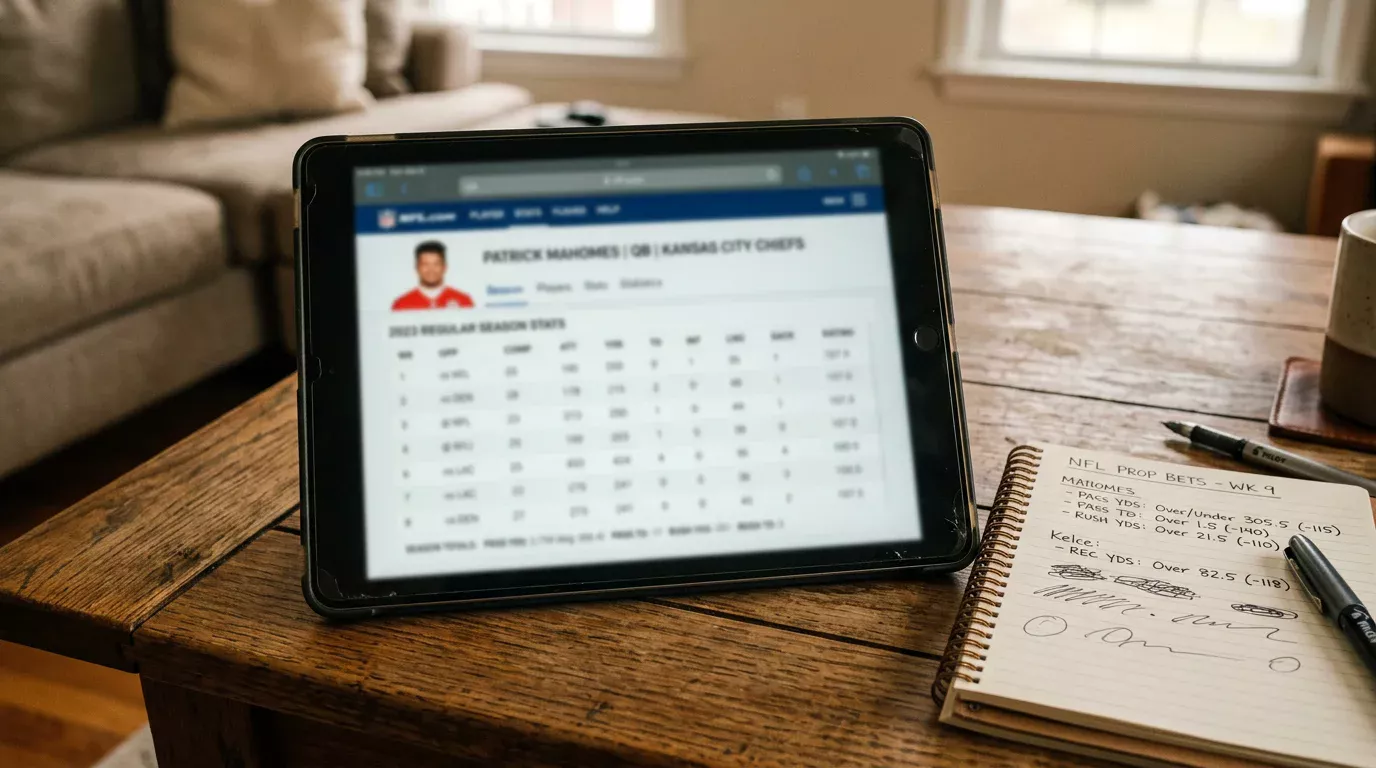
Tracking every bet is non-negotiable if you’re treating NFL wagering as a skill rather than entertainment. The minimum data points for each bet: date, matchup, market (spread, moneyline, total, prop), your selection, the odds, the stake, the bookmaker, the result, and the profit/loss. That’s nine columns in a spreadsheet, and filling them in takes under a minute per bet. If you can’t be bothered to spend a minute recording a bet, you shouldn’t be spending money on it.
The value of tracking isn’t the record-keeping itself — it’s the patterns that emerge when you review. After my first fully tracked season, I discovered three things I would never have noticed otherwise. First, my spread bets on Thursday Night Football were significantly worse than my Sunday bets. I was rushing the analysis to get a bet in before the short-week kickoff, and my win rate showed it. Second, my prop bets had a negative ROI even though I enjoyed placing them — the margins on props are wider than on spreads, and I wasn’t accounting for that in my volume. Third, my best month was November, which correlated with the point in the season where I had the most data and the least emotional attachment to early-season results.
Review cadence matters. I do a quick review every Monday morning — ten minutes to log the weekend’s results and note any immediate observations. I do a deeper review at the bye-week midpoint of the season, looking for patterns across six to eight weeks of data. And I do a full-season review in February, before the next cycle begins, where I assess overall ROI, identify my strongest and weakest market types, and set strategic adjustments for the following season.
One warning: don’t let tracking become a substitute for analysis. I’ve seen punters with beautifully maintained spreadsheets who never act on the data they collect. The spreadsheet is a diagnostic tool. It tells you where you’re strong and where you’re leaking. What you do with that information — dropping unprofitable bet types, doubling focus on profitable ones, adjusting your staking — is the strategy. The spreadsheet is just the mirror.
Strategy Traps: Chasing Losses, Parlays-Only, and Narrative Bias
Every strategic failure I’ve witnessed in NFL betting — mine and others’ — traces back to one of three traps. They’re worth naming explicitly, because the people caught in them rarely recognise it while it’s happening.
Chasing losses is the most destructive. A bad Sunday produces three or four losing bets. Instead of accepting the result and moving to the next week with the same unit size, the bettor increases their stakes on Monday Night Football to “get back to even.” This is emotional arithmetic. The MNF game doesn’t know or care about your Sunday losses. It has its own spread, its own probability, and its own expected value. Doubling your stake doesn’t double your edge — it doubles your exposure to a market that’s already priced fairly. And if Monday goes wrong too, the hole deepens and the urge to chase becomes even stronger. The only cure is a staking plan that’s set before the season and doesn’t flex week to week. Flat-betting is the simplest version: same stake, every bet, regardless of recent results.
The parlays-only trap is more insidious because it feels like winning. You hit a four-leg accumulator at 10/1 and the payout is thrilling. What you don’t notice is the seventeen four-leg parlays that lost before that one. Parlays accounted for 22% of total handle at US bookmakers in 2024, with an average hold rate exceeding 15%. That hold rate is three times higher than straight bets. The bookmaker isn’t offering you 10/1 out of generosity — they’re offering it because the true probability of all four legs hitting is worse than the odds imply. I use parlays occasionally, but only with correlated legs where the outcome of one bet logically increases the probability of another. Random four-team accumulators built from unrelated matchups are the bookmaker’s favourite product for a reason.
Narrative bias is the subtlest trap. NFL media runs on storylines: the revenge game, the rookie quarterback’s first start, the team that “always plays well in December.” These narratives are entertaining, and they’re occasionally relevant. But they’re not data. A team “wanting it more” is not a handicapping factor that shows up in any statistical model. The danger is that narrative makes you feel confident about a bet without doing the work to justify that confidence. My test: if I can’t support my position with a number — an ATS trend, a defensive ranking, a pace-of-play metric — I don’t have a position. I have a story. Stories make great television. They make terrible bets.
Building a System That Survives a Full Season
NFL strategy isn’t a moment-of-brilliance discipline. It’s a 22-week grind from September through the Super Bowl, plus the offseason futures cycle. The punters who profit aren’t the ones with the best week 3 picks — they’re the ones whose process holds up in week 14 when the season feels long, the bankroll has taken a hit, and the temptation to deviate from the plan is at its peak. Set your bankroll rules before kickoff. Shop every line. Track every bet. Let the calendar tell you when to be aggressive and when to be patient. And when you catch yourself chasing, parlaying on autopilot, or betting a narrative instead of a number — stop. Walk away from the app. The NFL will still be there next Sunday. Your bankroll should be too.
What percentage of my bankroll should I risk on a single NFL bet?
A standard approach is 1-2% of your total bankroll per bet. On a 500-pound bankroll, that means 5 to 10 pounds per wager. This keeps you in action through inevitable losing streaks and prevents any single result from materially damaging your season. Adjust the percentage quarterly based on bankroll changes, never mid-week.
How many UK bookmaker accounts do I need for effective line shopping?
Three to four accounts across different operator types gives you meaningful coverage. Mix UK-native bookmakers with platforms that have US-affiliated odds engines, as their NFL lines often diverge. More accounts help but add diminishing returns beyond four or five. The goal is to consistently find a half-point or better difference on the spreads you want to bet.
Does the Kelly Criterion work for NFL betting?
The Kelly Criterion can work in theory, but it requires accurate estimation of win probabilities — something even professional handicappers struggle with. A fractional Kelly approach (betting half or quarter of the full Kelly stake) is more practical for NFL because it reduces variance while still scaling bets with perceived edge. Most recreational bettors are better served by flat staking for its simplicity and psychological stability.
How do I track my NFL betting performance over a season?
Use a spreadsheet with columns for date, matchup, market type, selection, odds, stake, bookmaker, result, and profit or loss. Log every bet within minutes of placing it. Review weekly for immediate patterns, monthly for trend analysis, and at season’s end for strategic adjustments. The data is only useful if you act on what it reveals.
Learn more about bet nfl games on our main page.
You may also find NFL Draft Betting UK — How to Bet on the NFL Draft interesting.
Prepared by the bet nfl Games editorial staff.